

DPSIR Framework for Sustainable Aquaculture in the Red Sea Region (KSA): A Climate Adaptation and Mitigation Perspective
DPSIR Framework for Sustainable Aquaculture in the Red Sea Region (KSA): A Climate Adaptation and Mitigation Perspective
Read the original archive edition (PDF)
This paper is a contribution to the 6th International Workshop on Applied Research for Enhancing the Aquaculture Sector in Saudi Arabia. It provides an overview of the DPSIR framework and its relevance to sustainable aquaculture development in the Red Sea, with a specific focus on aligning with Saudi Vision 2030 and global climate adaptation and mitigation goals.
Introduction
The Red Sea region, specifically along Saudi Arabia's coastline, represents a critical nexus of ecological, economic, and social significance. As one of the planet's most biodiverse and ecologically unique marine environments, the Red Sea is home to extensive coral reefs, seagrass meadows, and a wide variety of endemic marine species. These natural assets provide a foundation for economic diversification initiatives in Saudi Arabia, particularly in the aquaculture sector, which is identified as a key contributor to achieving the nation's Vision 2030 goals.
With increasing global emphasis on sustainable food systems, the aquaculture industry in the Red Sea holds potential not only for enhancing food security but also for addressing climate change challenges. However, this potential comes with substantial responsibilities, including mitigating environmental pressures such as habitat alteration, nutrient pollution, and overexploitation of marine resources. The development of aquaculture in such a sensitive ecosystem demands a nuanced, science-driven approach that integrates sustainability principles with innovative technological solutions.
The Drivers, Pressures, State of environment, Impacts, and Responses (DPSIR) framework provides a comprehensive method for analyzing and addressing the complex dynamics of aquaculture in the Red Sea. This article explores the application of the DPSIR framework in the Red Sea context, emphasizing its role in fostering a sustainable, resilient aquaculture sector that aligns with global climate goals and supports regional economic transformation.
DPSIR Framework for Aquaculture in the Red Sea Region
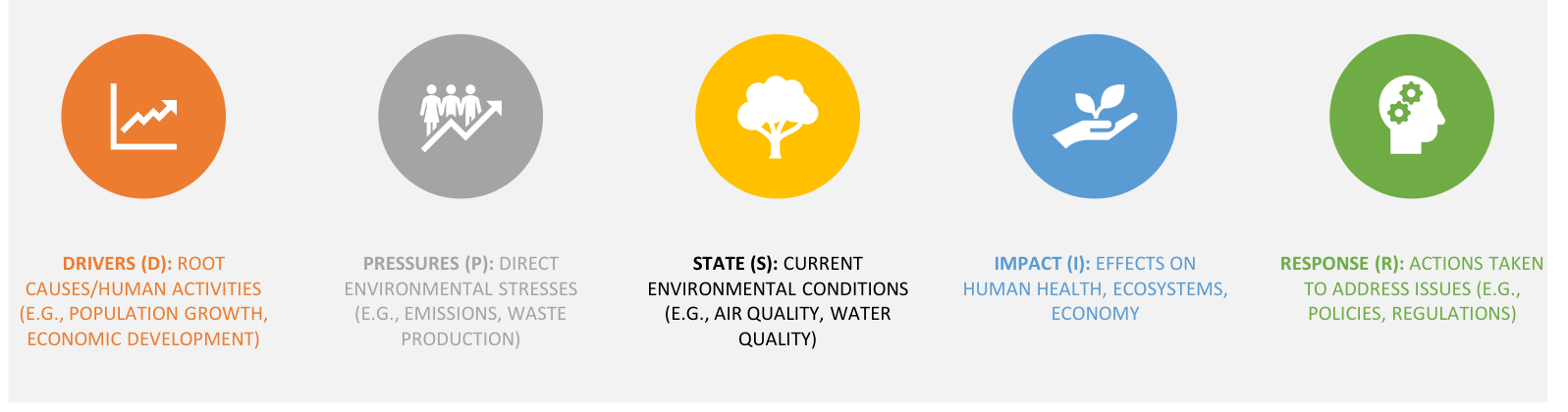
DPSIR (drivers, pressures, state, impact, and response model of intervention) is a causal framework used to describe the interactions between society and the environment. It seeks to analyze and assess environmental problems by bringing together various scientific disciplines, environmental managers, and stakeholders, and solve them by incorporating sustainable development.
Read figure text
DRIVERS (D): ROOT CAUSES/HUMAN ACTIVITIES (E.G., POPULATION GROWTH, ECONOMIC DEVELOPMENT) PRESSURES (P): DIRECT ENVIRONMENTAL STRESSES (E.G., EMISSIONS, WASTE PRODUCTION) STATE (S): CURRENT ENVIRONMENTAL CONDITIONS (E.G., AIR QUALITY, WATER QUALITY) IMPACT (I): EFFECTS ON HUMAN HEALTH, ECOSYSTEMS, ECONOMY RESPONSE (R): ACTIONS TAKEN TO ADDRESS ISSUES (E.G., POLICIES, REGULATIONS)
1. Drivers
Drivers are the underlying social, economic, and environmental factors that motivate aquaculture development in the Red Sea region.
- Economic Growth and Diversification: Saudi Arabia's Vision 2030 emphasizes economic diversification, with aquaculture identified as a key sector for reducing dependence on oil revenues.
- Food Security: The growing demand for sustainable protein sources drives the expansion of aquaculture.
- Technological Advancements: Innovations in aquaculture practices, such as recirculating aquaculture systems (RAS), facilitate development in arid and sensitive ecosystems.
- Global Climate Commitments: Saudi Arabia’s pledge to reduce greenhouse gas emissions encourages the adoption of low-impact aquaculture practices.
The DPSIR framework provides a systematic approach to developing sustainable aquaculture in the Red Sea region, aligning with Saudi Arabia’s Vision 2030 and global climate goals. By addressing the drivers, pressures, and impacts of aquaculture, and implementing targeted responses, Saudi Arabia can achieve a balance between economic growth, environmental conservation, and climate resilience.
2. Pressures
Pressures are the direct consequences of aquaculture activities that affect the marine environment.
- Habitat Alteration: Expansion of aquaculture infrastructure can disturb critical marine habitats such as coral reefs and seagrass beds.
- Pollution: Nutrient runoff, excess feed, and waste discharge contribute to eutrophication and reduced water quality.
- Overexploitation: Overharvesting of wild stocks for feed and broodstock can strain local ecosystems.
- Climate Stressors: Rising sea temperatures and increased salinity levels exacerbate pressures on aquaculture systems.
3. State of Environment
The state refers to the current conditions of the marine environment in the Red Sea region.
- Marine Biodiversity: The Red Sea hosts a unique and diverse array of marine species, many of which are sensitive to environmental changes.
- Water Quality: Increasing nutrient loads and pollutants from aquaculture operations threaten the pristine conditions of the Red Sea.
- Climate Change Impacts: Ocean acidification, warming seas, and sea level rise pose risks to aquaculture viability and marine ecosystem health.
4. Impacts
Impacts are the effects of changes in the state of the environment on ecosystems, human health, and socio-economic systems.
- Ecosystem Degradation: Loss of coral reefs and seagrass beds affects biodiversity and ecosystem services.
- Economic Costs: Degraded marine environments increase the costs of aquaculture operations, such as water treatment and disease management.
- Community Livelihoods: Disruptions to traditional fishing and tourism sectors can undermine local economies and social cohesion.
- Contribution to Climate Change: Unsustainable practices can exacerbate greenhouse gas emissions, counteracting mitigation efforts.
5. Responses
Responses are the actions taken to address the drivers, pressures, and impacts of aquaculture activities.
- Policy and Regulation: Implementing stringent environmental standards for aquaculture operations, including site selection and waste management.
- Technological Innovations: Adoption of low-impact practices such as integrated multi-trophic aquaculture (IMTA) and renewable energy-powered systems.
- Capacity Building: Training programs for local communities and stakeholders to promote sustainable aquaculture practices.
- Climate Adaptation Strategies: Incorporating climate-resilient species and enhancing ecosystem-based approaches.
- Monitoring and Research: Establishing robust systems to monitor environmental parameters and assess aquaculture’s impacts.
Linking DPSIR to Climate Adaptation and Mitigation
Climate Change Impacts and Opportunities
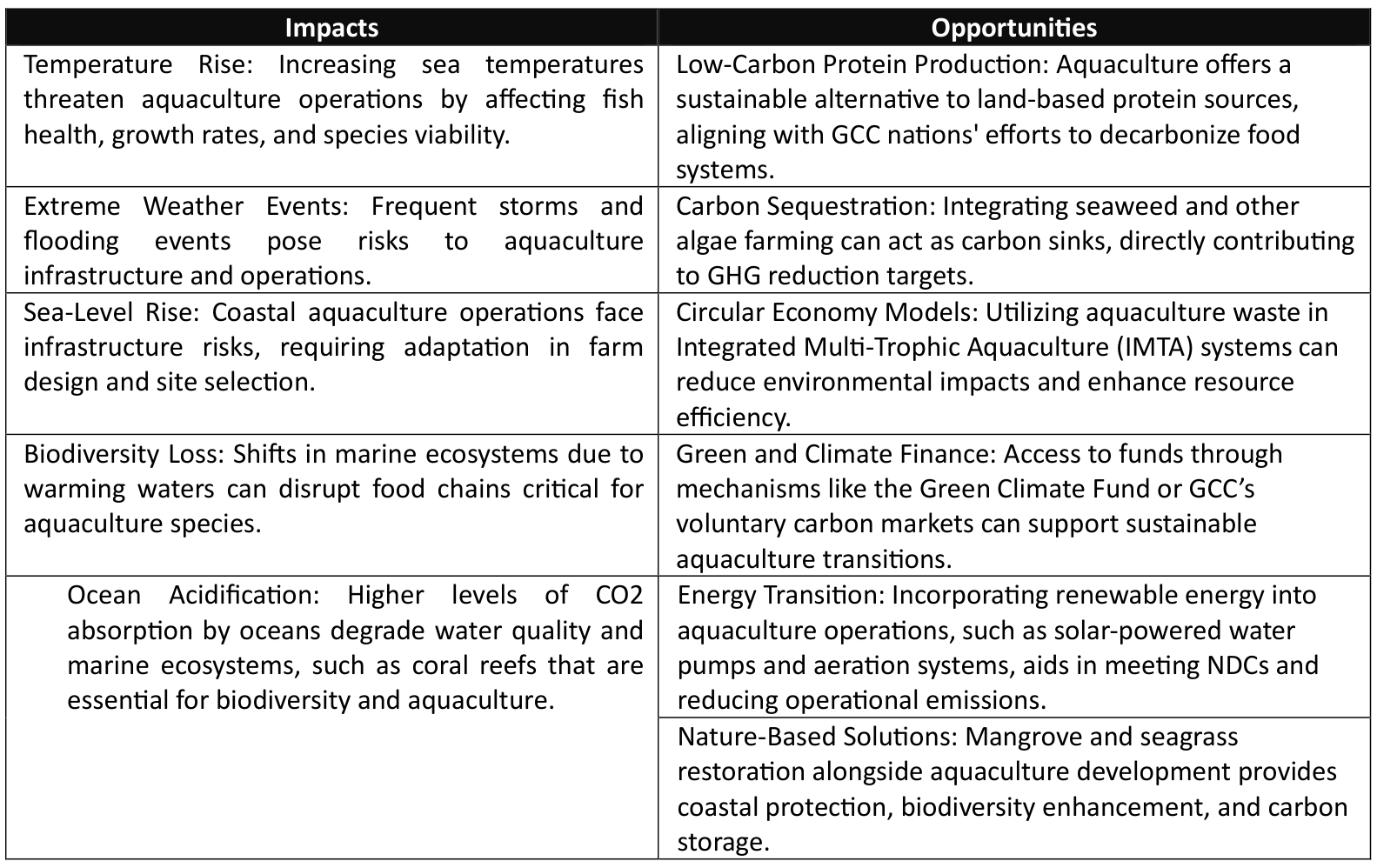
Aquaculture in the Kingdom of Saudi Arabia (KSA) and the Gulf Cooperation Council (GCC) region presents both challenges and opportunities when examined through the lens of climate change, considering the ambitious nationally determined contributions (NDCs) and net-zero targets.
Read figure text
Impacts Opportunities Temperature Rise: Increasing sea temperatures threaten aquaculture operations by affecting fish health, growth rates, and species viability. Low-Carbon Protein Production: Aquaculture offers a sustainable alternative to land-based protein sources, aligning with GCC nations' efforts to decarbonize food systems. Extreme Weather Events: Frequent storms and flooding events pose risks to aquaculture infrastructure and operations. Carbon Sequestration: Integrating seaweed and other algae farming can act as carbon sinks, directly contributing to GHG reduction targets. Sea-Level Rise: Coastal aquaculture operations face infrastructure risks, requiring adaptation in farm design and site selection. Circular Economy Models: Utilizing aquaculture waste in Integrated Multi-Trophic Aquaculture (IMTA) systems can reduce environmental impacts and enhance resource efficiency. Biodiversity Loss: Shifts in marine ecosystems due to warming waters can disrupt food chains critical for aquaculture species. Green and Climate Finance: Access to funds through mechanisms like the Green Climate Fund or GCC’s voluntary carbon markets can support sustainable aquaculture transitions. Ocean Acidification: Higher levels of CO2 absorption by oceans degrade water quality and marine ecosystems, such as coral reefs that are essential for biodiversity and aquaculture. Energy Transition: Incorporating renewable energy into aquaculture operations, such as solar-powered water pumps and aeration systems, aids in meeting NDCs and reducing operational emissions. Nature-Based Solutions: Mangrove and seagrass restoration alongside aquaculture development provides coastal protection, biodiversity enhancement, and carbon storage.
Climate Adaptation
The DPSIR framework helps identify vulnerabilities and adaptive measures in aquaculture practices:
- Adaptation to Temperature Changes: Using thermotolerant species and adjusting farming schedules.
- Resilient Infrastructure: Designing systems to withstand extreme weather events and sea-level rise.
- Ecosystem Restoration: Integrating habitat restoration with aquaculture development to enhance coastal resilience.
Climate adaptation measures include utilizing thermotolerant species, designing resilient infrastructure to endure extreme weather and rising sea levels, and integrating habitat restoration with aquaculture to bolster coastal resilience. On the mitigation front, scaling seaweed farming for carbon sequestration, shifting towards offshore aquaculture to minimize land use pressure, and transitioning to renewable energy sources in aquaculture operations are key strategies.
Climate Mitigation
Aquaculture can contribute to climate mitigation through:
- Carbon Sequestration: Seaweed farming acts as a natural carbon sink.
- Reducing Land Use Pressure: Offshore aquaculture reduces reliance on terrestrial ecosystems.
- Energy Efficiency: Transitioning to solar and wind energy for aquaculture operations.
Way Forward
Given the capabilities of King Abdullah University of Science and Technology (KAUST) and its existing collaborations with governmental and private sectors both locally and internationally, the following steps are recommended:
Leverage KAUST's Research Expertise
- Advanced Monitoring Systems: Utilize KAUST’s research in remote sensing, marine biology, and big data analytics to monitor and assess aquaculture impacts in real-time.
- Innovative Technologies: Develop cutting-edge technologies, such as bioengineering for climate-resilient species and renewable energy integration into aquaculture systems.
- Ecosystem Restoration Projects: Partner with KAUST’s marine science experts to implement habitat restoration programs, such as coral and seagrass rehabilitation.
Strengthen Public-Private Partnerships
- Collaborative Projects: Facilitate joint ventures between KAUST, Enerqa, and private sector players like Beacon to pilot sustainable aquaculture models.
- Policy Advocacy: Leverage Enerqa's expertise to advocate for science-backed policies that promote sustainable aquaculture and align with ESG standards.
- Capacity Building Programs: Develop training and education initiatives for stakeholders, emphasizing sustainability and innovation in aquaculture practices.
Support Climate Change Mitigation and Adaptation
- Carbon Footprint Assessment: Collaborate with Enerqa to audit / conduct life cycle assessments (LCAs) for aquaculture systems, ensuring alignment with international carbon accounting standards (e.g., ISO 14040).
- Climate Finance Access: Leverage KAUST’s and Enerqa’s expertise to secure climate finance through mechanisms such as the Green Climate Fund and voluntary carbon markets.
- Green Technology Deployment: Utilize renewable energy technologies in aquaculture operations to reduce greenhouse gas emissions.
Drive Innovation Through International Collaboration
- Knowledge Sharing: Partner with global institutions to exchange best practices and deploy scalable solutions in aquaculture and climate adaptation.
- Investment Attraction: Showcase projects jointly developed by KAUST, Beacon, and Enerqa to attract funding for climate-smart aquaculture.
- Research on Nature-Based Solutions: Explore natural approaches like mangrove and seagrass integration with aquaculture systems, leveraging Beacon’s regional expertise.
Promote ESG and Sustainability Standards
- ESG Integration: Introduce comprehensive ESG frameworks for aquaculture, incorporating metrics for environmental impact, social inclusion, and governance.
- MRV System Implementation: Partner with Enerqa to establish robust measurement, reporting, and verification systems for aquaculture’s climate impacts, aligning with UNFCCC requirements.
- Capacity Building: Equip local stakeholders with tools and knowledge to implement sustainable aquaculture practices in alignment with international standards.
Given KAUST’s capabilities and collaborations, several strategic steps are recommended. Leveraging research expertise involves advancing monitoring systems, developing bioengineered species, and restoring marine ecosystems. Strengthening partnerships between KAUST, Enerqa, and private entities can pilot sustainable aquaculture models, while accessing climate finance through global mechanisms and carbon markets can fund these initiatives. Promoting ESG integration requires introducing robust frameworks and measurement, reporting, and verification (MRV) systems to meet sustainability targets. Driving international collaboration enables the exchange of best practices and scaling of successful solutions globally.
References
- Food and Agriculture Organization of the United Nations (FAO). (2020). "Sustainable Aquaculture Development." Retrieved from www.fao.org.
- Saudi Vision 2030. (2023). "National Transformation Program Goals for Aquaculture." Retrieved from www.vision2030.gov.sa.
- Duarte, C. M., et al. (2021). "The Role of Marine Aquaculture in Climate Mitigation." Nature Communications, 12(1), 1-10.
- Red Sea Development Company. (2022). "Marine Biodiversity Conservation and Sustainable Practices in the Red Sea." Retrieved from www.theredsea.sa.
- IPCC. (2019). "Special Report on the Ocean and Cryosphere in a Changing Climate." Retrieved from www.ipcc.ch.
Related Content
Sudan's Energy Balance 2020
Sudan’s energy balance for the year 2020 had shown lower figures from previous years trends, while maintaining largely the same proportions of energy supply resources,
Read Article →Scope 4 Emissions: The Concept of Avoided Emissions
In the global effort to combat climate change, the focus has traditionally been on reducing greenhouse gas (GHG) emissions from corporate operations and value chains.
Read Article →The Imperative for ESG Readiness Tools: Unlocking Benefits for Companies, Institutions, and Society
Environmental, Social, and Governance (ESG) considerations have evolved from being a corporate trend to becoming essential criteria for sustainable and ethical growth.
Read Article →