

Scope 4 Emissions: The Concept of Avoided Emissions
Scope 4 Emissions: The Concept of Avoided Emissions
Read the original archive edition (PDF)
In the global effort to combat climate change, the focus has traditionally been on reducing greenhouse gas (GHG) emissions from corporate operations and value chains.
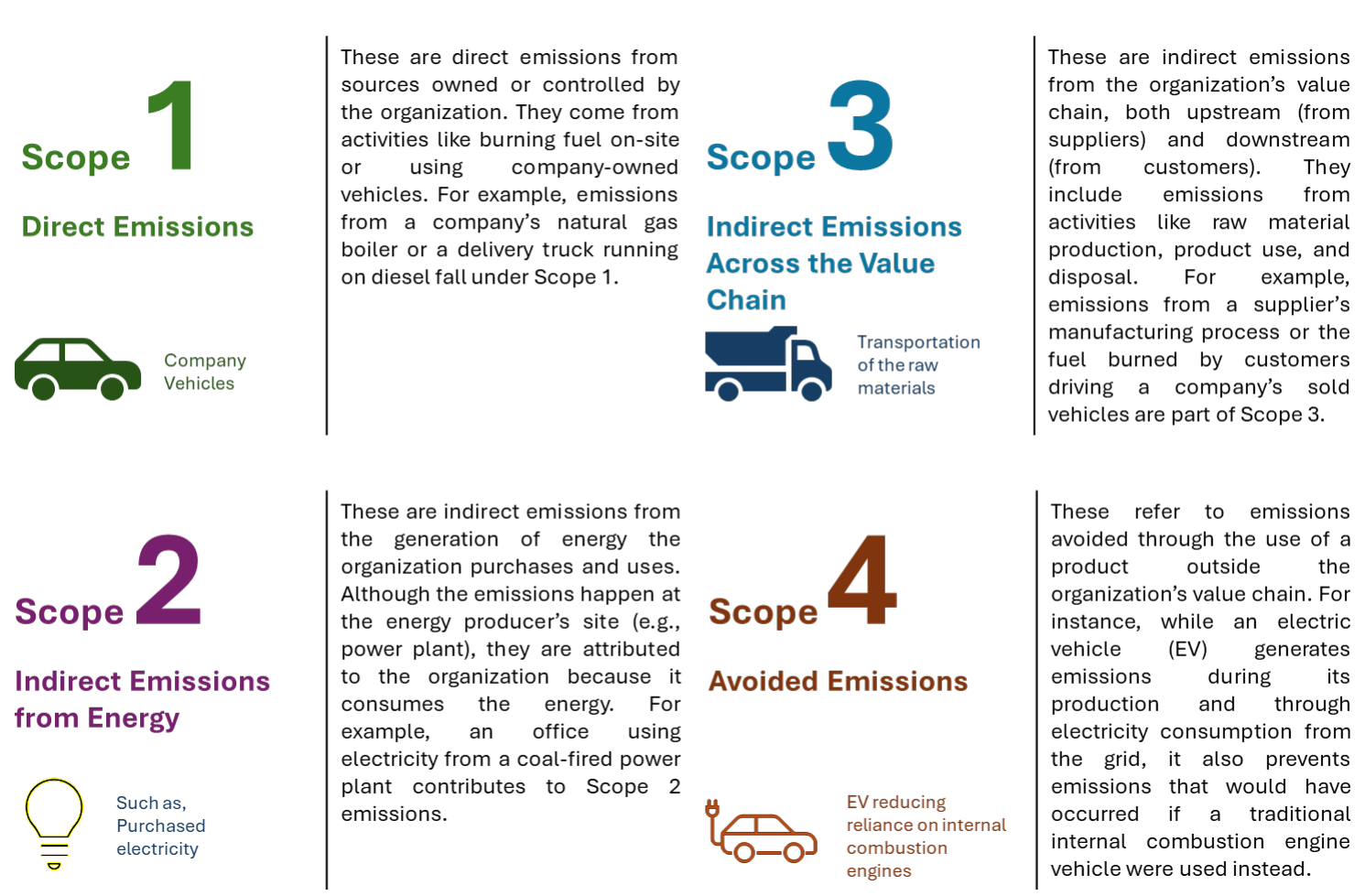
The Greenhouse Gas Protocol, the most widely used framework for carbon accounting, categorizes emissions into three scopes:
However, an additional concept often referred to as Scope 4 emissions has gained attention [10], [11]. While not officially recognized by the GHG Protocol, Scope 4 refers to avoided emissions, or emissions reductions that occur outside a company’s direct operations or value chain as a result of the use of its products, services, or initiatives[12].
What Is Scope 4 Emissions?
Avoided emissions occur when an innovation or intervention reduces GHG emissions compared to a baseline or business-as-usual scenario. Unlike Scopes 1, 2, and 3, which quantify existing emissions, Scope 4 highlights the positive impact of alternative solutions [11], [13]. Key examples include:
- Renewable Energy: Solar or wind energy displacing fossil fuel-based power generation.
- Low-Carbon Products: Electric vehicles replacing internal combustion engines, or energy-efficient appliances reducing electricity consumption.
- Circular Economy Initiatives: Recycling materials to avoid the emissions of producing virgin resources.
- Behavioral Programs: Promoting telecommuting or carpooling to reduce transportation emissions.
Why Do Scope 4 Emissions Matter?
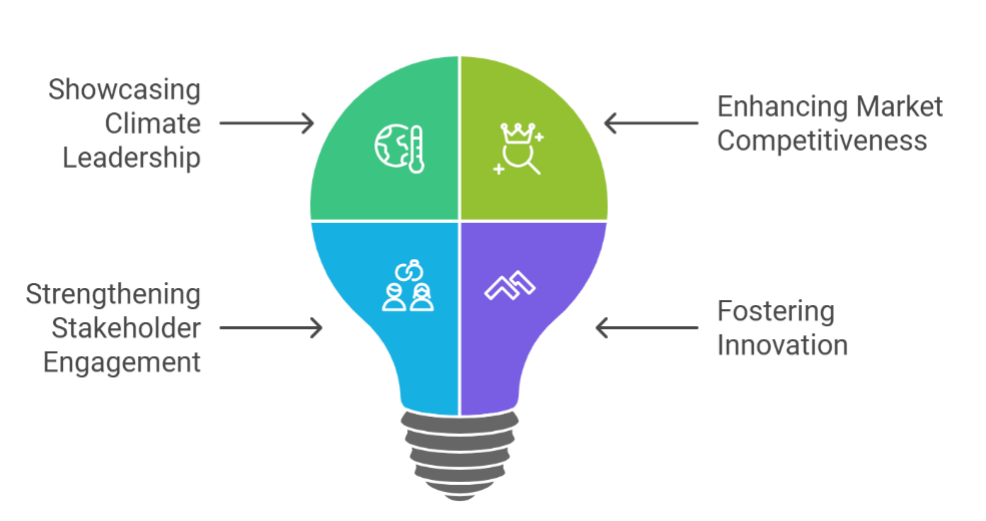
Scope 4 emissions demonstrate how companies can extend their influence beyond their operational boundaries, contributing to global decarbonization efforts. The potential benefits include: [14]
- Showcasing Climate Leadership: Highlighting how your organization’s solutions address climate change at scale.
- Enhancing Market Competitiveness: Differentiating your products and services as sustainable, appealing to environmentally conscious customers.
- Strengthening Stakeholder Engagement: Attracting investors and partners who prioritize sustainability in their decision-making.
- Fostering Innovation: Inspiring the development of climate-smart technologies and services.
Challenges in Scope 4 Implementation
While the concept of Scope 4 offers significant potential, its adoption comes with challenges [10]:
- Standardization Gaps: The absence of globally accepted frameworks can lead to inconsistent interpretations.
- Risk of Double Counting: Overlapping claims of avoided emissions by multiple entities in the value chain may compromise reporting accuracy. [11]
- Complex Verification Processes: Calculating avoided emissions requires robust data and meticulous life-cycle analysis.
Driving Change Through Scope 4
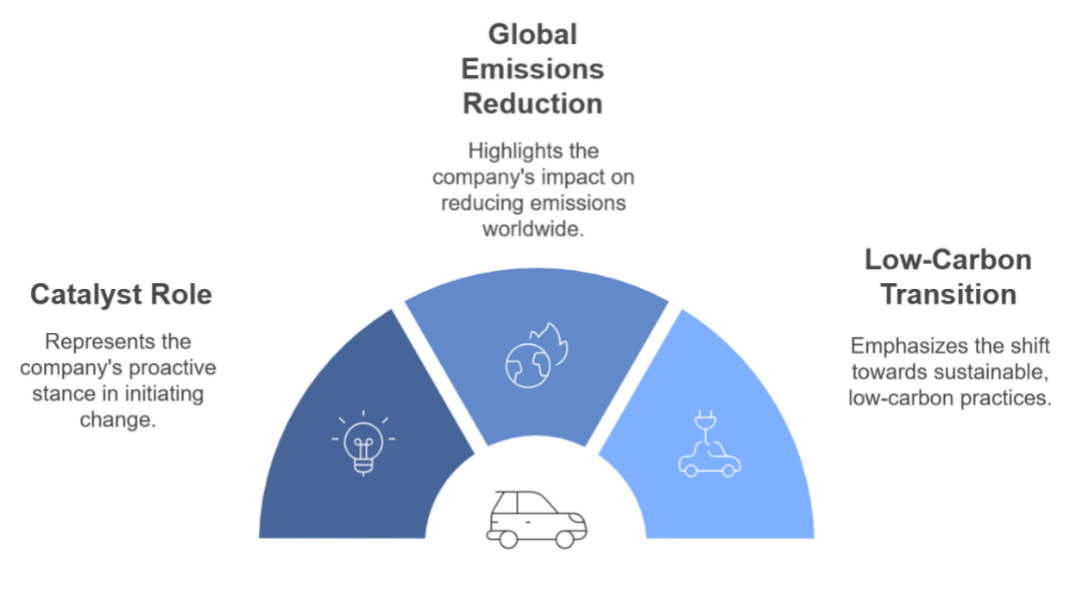
Although not formally part of the GHG Protocol, Scope 4 emissions provide a powerful narrative of how companies can act as catalysts for global emissions reductions. By embracing this concept, organizations can lead the charge in the transition to a low-carbon economy.
References
[10] I. o. S. Studies, 14 October 2024. [Online]. Available: https://instituteofsustainabilitystudies.com/insights/lexicon/what-are-scope-4-emissions/.
[11] W. B. C. f. S. D. (WBCSD), Guidance on Avoided Emissions: Helping business drive innovations and scale solutions toward Net Zero, Geneva, Amsterdam, New Delhi, London, New York, Singapore: World Business Council for Sustainable Development (WBCSD), 2023.
[12] W. R. INSTITUTE, "WORLD RESOURCED INSTITUTE," 05 November 2013. [Online]. Available: https://www.wri.org/insights/do-we-need-standard-calculate-avoided-emissions.
[13] M. D. G. G. C. L. M. A. Lauren Shwisberg, "How to Build Clean Energy Portfolios A Practical Guide to Next-Generation Procurement Practices," Rocky Mountain Institute, Basalt, CO, 81621 USA, 2020.
[14] P. A. [Online]. Available: https://plana.earth/glossary/scope-4-emissions.
Related Content
Sudan's Energy Balance 2020
Sudan’s energy balance for the year 2020 had shown lower figures from previous years trends, while maintaining largely the same proportions of energy supply resources,
Read Article →The Imperative for ESG Readiness Tools: Unlocking Benefits for Companies, Institutions, and Society
Environmental, Social, and Governance (ESG) considerations have evolved from being a corporate trend to becoming essential criteria for sustainable and ethical growth.
Read Article →DPSIR Framework for Sustainable Aquaculture in the Red Sea Region (KSA): A Climate Adaptation and Mitigation Perspective
This paper is a contribution to the 6th International Workshop on Applied Research for Enhancing the Aquaculture Sector in Saudi Arabia.
Read Article →