

Exploring the Rainbow of Hydrogen Technology: A Path to Sustainable Energy and Climate Resilience
Exploring the Rainbow of Hydrogen Technology: A Path to Sustainable Energy and Climate Resilience
Read the original archive edition (PDF)
Abstract
Hydrogen technologies are gaining significant attention to decarbonize energy-intensive sectors and contribute to global climate goals. This literature review examines the diverse “rainbow” of hydrogen production methods — gray, blue, green, turquoise, pink, yellow, and white — each characterized by unique production processes, emissions profiles, and suitability across various economic and geographic contexts. The paper traces the historical development of these technologies and provides a comparative analysis, focusing on technical feasibility, cost implications, and environmental impact, with an emphasis on the applicability of hydrogen solutions in developing regions, particularly in the MENA and Africa.
Each hydrogen type offers specific benefits and limitations. While gray hydrogen remains widely used, its high emissions make it unsuitable for long-term climate strategies. Blue and green hydrogen, by incorporating carbon capture and renewable power sources respectively, offer low-carbon alternatives that align better with sustainability goals. Emerging technologies, such as turquoise and white hydrogen, add further dimensions but require additional development and market readiness. By linking these technologies to climate change mitigation, the paper highlights hydrogen’s potential role in reducing global emissions and provides recommendations for strategic adoption based on regional strengths and resources. This review underscores the need for tailored policies, investment in infrastructure, and international collaboration to maximize hydrogen’s role in a sustainable energy transition.
1. Introduction
Hydrogen (H₂) is the most abundant element in the universe, constituting approximately 75% of all normal matter by mass. It is found extensively in stars, gas clouds, and even in the vast emptiness of interstellar space, where it plays a critical role in cosmic evolution and stellar formation (Carroll & Ostlie, 2017). On Earth, hydrogen primarily occurs in combination with oxygen in water (H₂O) and within various organic compounds in living organisms and fossil fuels (Glasstone, 2013).
Hydrogen is often discussed as a clean energy source due to its high energy content. However, molecular hydrogen (H₂) is not naturally abundant on Earth because of its high reactivity, which causes it to bond readily with other elements. To use it as an energy carrier, hydrogen must be produced by separating it from compounds such as water or hydrocarbons through processes like electrolysis or steam methane reforming (SMR) (Sharma & Ghoshal, 2015). As an energy source, hydrogen’s high energy content per unit weight— 120 megajoules per kilogram— is nearly three times that of gasoline (Züttel, 2003). When hydrogen is burned or used in fuel cells, it produces only water as a byproduct, making it a promising candidate to replace fossil fuels, which release greenhouse gases (GHGs) and pollutants (Turner, 2004). Due to these properties, hydrogen is increasingly viewed as a pivotal element in the transition toward a clean energy economy (U.S. Department of Energy, 2020).
The current hydrogen economy is tightly connected to the fossil fuel industry, as approximately 96% of hydrogen is produced using fossil fuels like natural gas through SMR, which releases significant CO₂ emissions (International Energy Agency, 2019). To reduce the carbon footprint of hydrogen production, alternatives such as “green hydrogen” — produced via water electrolysis powered by renewable energy sources— are being developed as essential steps toward decarbonizing the hydrogen supply chain (Staffell et al., 2019).
Hydrogen’s versatility also makes it ideal for hard-to-decarbonize sectors, including heavy-duty transportation (e.g., trucking, shipping, and aviation), where it can serve directly as a fuel or in derivative forms like ammonia (Tollefson, 2021). In agriculture, hydrogen is essential for synthesizing ammonia (NH₃) through the Haber-Bosch process, which consumes large amounts of hydrogen, thus linking agricultural costs and sustainability to the hydrogen economy (Smil, 2001). Additionally, hydrogen is crucial in industrial processes such as oil refining and methanol production, underscoring its deep integration into the energy and industrial sectors (Speight, 2020).
Hydrogen’s relevance extends beyond Earth as well. It is a primary fuel in space exploration, where its high energy density is utilized in liquid hydrogen rocket propellants (NASA, 2021). The potential for hydrogen as a clean fuel on Earth and its essential role in space exploration underscore its versatility and critical importance for future energy strategies.
2. Historical Evolution of Hydrogen Production
The production of hydrogen dates back to the early 19th century, when scientists first recognized hydrogen as a distinct element. Initially, hydrogen production was focused on extracting it from water through electrolysis, a process discovered by British scientists William Nicholson and Anthony Carlisle in 1800. This method was revolutionary at the time but required significant energy input, limiting its practical applications (Smil, 2017).
The industrial production of hydrogen began with the development of steam methane reforming (SMR) in the 1920s, which uses high-temperature steam to extract hydrogen from methane gas. SMR became a dominant method due to its efficiency and the widespread availability of natural gas, leading to what is now termed “gray hydrogen”— hydrogen produced from fossil fuels without carbon capture (Rostrup-Nielsen, 2017). Gray hydrogen is associated with high carbon dioxide emissions, as the process releases significant quantities of CO₂, contributing to greenhouse gas emissions (International Energy Agency, 2019).
In response to growing environmental concerns, the 1970s oil crises spurred research into alternative hydrogen production methods that were less dependent on fossil fuels. During this period, electrolysis experienced renewed interest, especially when powered by renewable energy sources. This shift marked the early conceptualization of “green hydrogen,” a term now used to describe hydrogen produced with renewable electricity, resulting in zero direct emissions (Bockris, 2002).
In the 2000s, advances in carbon capture and storage (CCS) technologies led to the emergence of “blue hydrogen,” a cleaner variant of gray hydrogen. Blue hydrogen employs the same SMR process but incorporates CCS to trap and store up to 90% of the CO₂ emissions, making it a lower-carbon option. This method has gained popularity as a transitional solution, leveraging existing natural gas infrastructure while reducing the carbon footprint of hydrogen production (Staffell et al., 2019).
Simultaneously, new production methods for hydrogen were developed, including methane pyrolysis, which produces “turquoise hydrogen” by decomposing methane into solid carbon and hydrogen. This method eliminates CO₂ emissions but remains less commercially viable due to high costs and limited technological readiness (Tollefson, 2021). Other emerging types include “pink hydrogen,” produced via electrolysis powered by nuclear energy, which offers a low-emission alternative but is constrained by the availability and public acceptance of nuclear power (Hydrogen Council, 2021).
Recent developments have also introduced “yellow hydrogen,” which is derived from grid-based electricity, and “white hydrogen,” a naturally occurring form of hydrogen found in certain geological formations. While yellow hydrogen’s environmental impact depends on the grid’s energy mix, white hydrogen remains a niche resource that has not yet been widely developed for commercial use (He, 2020).
The evolution of hydrogen production reflects the progress and challenges of balancing technological efficiency with environmental considerations. As new methods and technologies develop, hydrogen is increasingly viewed as a vital component of sustainable energy systems capable of reducing global carbon emissions.
3. Analysis of Hydrogen Technologies by Color
Hydrogen production methods are classified by color to represent different processes, each with unique environmental impacts, cost considerations, and applications. This section examines each “color” of hydrogen— gray, blue, green, turquoise, pink, yellow, and white— based on their production process, emissions, readiness, and usage potential in diverse sectors.
Gray Hydrogen
Gray hydrogen is derived from steam methane reforming (SMR), a mature, low-cost method that uses natural gas to produce hydrogen but releases substantial carbon dioxide (CO₂) emissions. Representing the most common form of hydrogen today, gray hydrogen is integral to industries needing affordable hydrogen, despite its high emissions profile (Rostrup-Nielsen, 2017; International Energy Agency, 2019).
Blue Hydrogen
Blue hydrogen also relies on SMR but incorporates carbon capture and storage (CCS) to reduce CO₂ emissions. By capturing up to 90% of these emissions, blue hydrogen presents a cleaner alternative to gray hydrogen while using existing SMR technology and infrastructure (Staffell et al., 2019). This makes blue hydrogen a feasible “bridge” technology for industrial applications, though challenges remain with the cost of CCS technology and long-term storage viability (Tollefson, 2021).
Green Hydrogen
Green hydrogen is produced through electrolysis powered by renewable energy sources, resulting in zero direct CO₂ emissions. This method offers the greatest potential for carbon neutrality but is currently limited by high production costs and the need for extensive renewable energy capacity (Bockris, 2002; U.S. Department of Energy, 2020). Green hydrogen’s applications are expanding into areas like transportation and power storage, where emissions reduction is prioritized, particularly as renewable energy prices continue to decline.
Turquoise Hydrogen
Turquoise hydrogen, produced via methane pyrolysis, decomposes methane into hydrogen and solid carbon, avoiding direct CO₂ emissions. This method is in the developmental stage and holds promise for regions with access to natural gas and solid carbon markets. However, its commercial viability remains constrained by cost and technological readiness (Abánades, 2020; Hydrogen Council, 2021).
Pink Hydrogen
Pink hydrogen production uses nuclear power to drive electrolysis, providing a low-emission solution without the variability of renewable energy sources. This consistent power supply can support continuous hydrogen production, which is particularly advantageous for heavy industrial applications. However, its scalability is limited by public perceptions of nuclear energy, regulatory challenges, and infrastructure costs (Glasstone & Sesonske, 2014; International Atomic Energy Agency, 2020).
Yellow Hydrogen
Yellow hydrogen, produced through grid-based electricity, varies in environmental impact depending on the grid’s energy composition. In regions where renewable energy contributes significantly to the grid, yellow hydrogen can be a cleaner option. However, in fossil fuel-heavy grids, the carbon footprint of yellow hydrogen remains relatively high (Ball & Wietschel, 2009).
White Hydrogen
White hydrogen, or naturally occurring hydrogen, is found in specific geological formations. Although it has potential as a clean hydrogen source, it remains underdeveloped, with significant challenges in extraction and storage. White hydrogen offers a unique opportunity if technology advances allow for efficient and economical extraction from natural deposits (He, 2020).
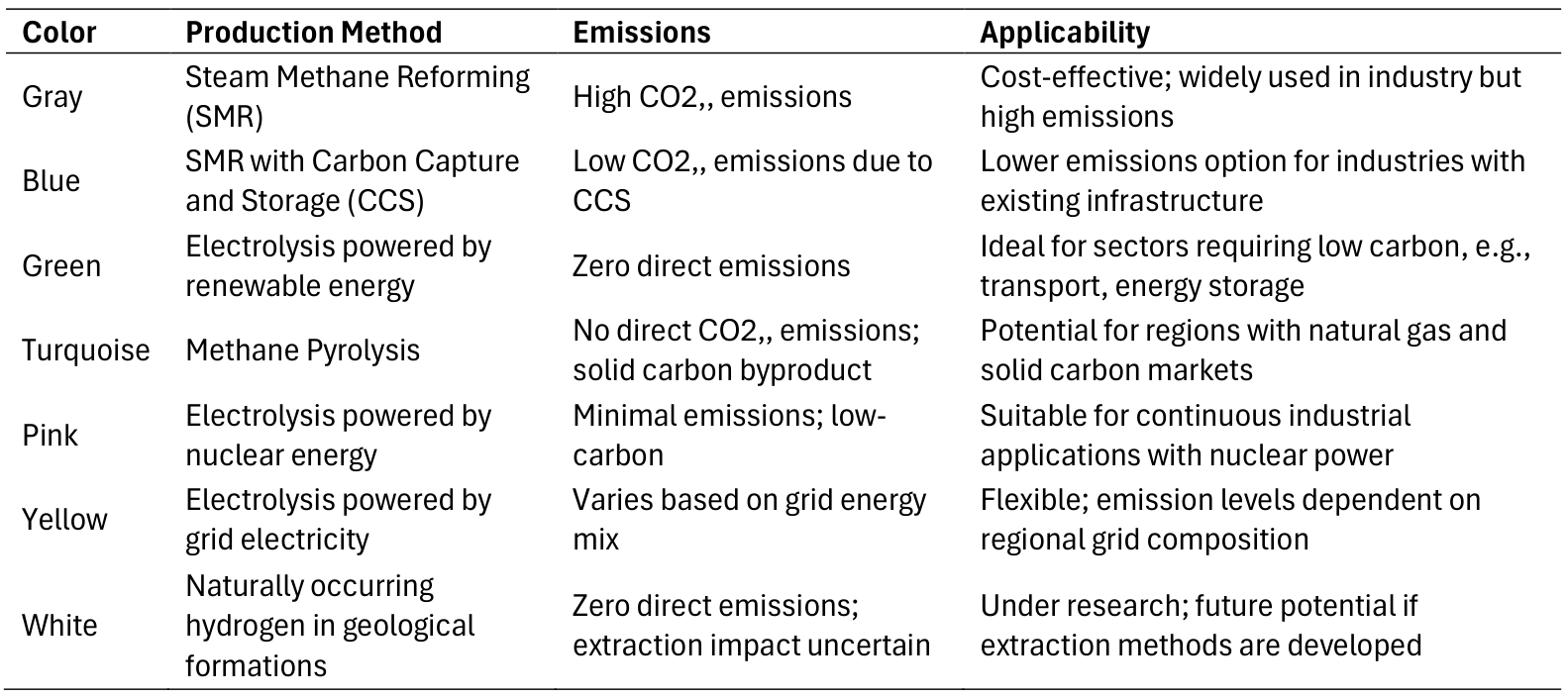
Read figure text
Table 1: Summary of Hydrogen Production Methods by Color, Emissions, and Applicability. Color Production Method Emissions Applicability Gray Steam Methane Reforming (SMR) High CO2‚‚ emissions Cost-effective; widely used in industry but high emissions Blue SMR with Carbon Capture and Storage (CCS) Low CO2‚‚ emissions due to CCS Lower emissions option for industries with existing infrastructure Green Electrolysis powered by renewable energy Zero direct emissions Ideal for sectors requiring low carbon, e.g., transport, energy storage Turquoise Methane Pyrolysis No direct CO2‚‚ emissions; solid carbon byproduct Potential for regions with natural gas and solid carbon markets Pink Electrolysis powered by nuclear energy Minimal emissions; low- carbon Suitable for continuous industrial applications with nuclear power Yellow Electrolysis powered by grid electricity Varies based on grid energy mix Flexible; emission levels dependent on regional grid composition White Naturally occurring hydrogen in geological formations Zero direct emissions; extraction impact uncertain Under research; future potential if extraction methods are developed
4. Feasibility in Developing and Least-Developed Countries
The feasibility of hydrogen technologies varies significantly across regions, particularly in developing and least-developed areas, where access to resources, infrastructure, and capital are often limited. In the MENA and Africa regions, the potential for deploying different types of hydrogen production technologies is influenced by each region’s unique resource availability, economic priorities, and environmental policies. This section explores the feasibility of various hydrogen production methods in these regions, examining factors such as energy availability, technological readiness, and regional needs.
Gray Hydrogen
Gray hydrogen, produced through steam methane reforming (SMR), is the most widely accessible hydrogen technology, largely due to its low production cost and the MENA region's abundant natural gas resources (International Energy Agency, 2021). Countries like Algeria, Egypt, and Qatar, which have significant natural gas reserves, can feasibly produce gray hydrogen to support industries such as ammonia production and refining. However, the high CO₂ emissions associated with gray hydrogen make it an unsustainable option in the long term, particularly as many African and MENA countries face increasing pressure to meet emissions targets (Bensaid et al., 2021).
Blue Hydrogen
Blue hydrogen, which incorporates carbon capture and storage (CCS) with SMR, offers a cleaner alternative that leverages the existing natural gas infrastructure. The MENA region, with its geological formations suited for carbon storage, has high potential for blue hydrogen projects. For example, Saudi Arabia and the United Arab Emirates have already begun exploring blue hydrogen initiatives; Saudi Arabia’s NEOM project, in collaboration with Air Products, plans to develop a large-scale blue hydrogen facility aimed at reducing emissions (Hydrogen Council, 2021). However, the high cost and technological requirements of CCS can be barriers for wider adoption in lower-income African nations, where capital constraints and limited access to CCS technology may hinder blue hydrogen’s feasibility (Lutsey & Sperling, 2018).
Green Hydrogen
Green hydrogen, produced through electrolysis powered by renewable energy, is an appealing option for regions with substantial renewable resources, particularly solar and wind. The MENA region has significant potential for green hydrogen production due to its vast solar capacity. Morocco has been a leader in green hydrogen development; its Noor Ouarzazate Solar Complex, one of the largest solar farms globally, has been linked to green hydrogen initiatives with support from the European Union and Germany (IRENA, 2021). In Africa, Namibia has also initiated green hydrogen projects, capitalizing on its high solar irradiance and favorable climate for year-round renewable production (UNIDO, 2022). Despite this potential, the high initial costs and need for renewable infrastructure present challenges in regions with limited capital, where access to affordable finance is crucial for green hydrogen’s scalability.
Turquoise Hydrogen
Turquoise hydrogen, generated by methane pyrolysis, produces hydrogen with a solid carbon byproduct, eliminating CO₂ emissions in the production process. This method could be viable in natural gas-rich countries like Algeria and Egypt if paired with solid carbon markets. However, methane pyrolysis is a relatively new technology and lacks widespread infrastructure, limiting its immediate feasibility in developing economies. The need for technological advancement and cost reductions makes turquoise hydrogen a longer-term option for the MENA and Africa regions (Hydrogen Council, 2021).
Pink Hydrogen
Pink hydrogen, produced via electrolysis powered by nuclear energy, is attractive for countries with nuclear infrastructure. The MENA region currently has limited nuclear capacity, with only the United Arab Emirates operating a commercial nuclear power plant (Barakah Nuclear Energy Plant). This restricts the feasibility of pink hydrogen in the region, though it could serve as a low-emission hydrogen source in countries that invest in nuclear power in the future (International Atomic Energy Agency, 2020). In Africa, pink hydrogen remains largely unfeasible due to minimal nuclear infrastructure and public resistance to nuclear development.
Yellow Hydrogen
Yellow hydrogen, derived from grid-based electricity, offers flexibility but carries a variable carbon footprint depending on the grid’s composition. In MENA countries with high fossil fuel-based energy production, such as Egypt and Libya, yellow hydrogen’s emissions profile remains high. However, in nations like Morocco, where the energy grid includes substantial renewable sources, yellow hydrogen production could offer a lower-carbon alternative (Ball & Wietschel, 2009). The feasibility of yellow hydrogen in Africa and the MENA region will depend heavily on national energy policies and the pace of renewable energy integration into regional grids.
White Hydrogen
White hydrogen, or naturally occurring hydrogen, is an emerging resource with potential in certain African countries, including Mali, where naturally occurring hydrogen deposits have been discovered (He, 2020). This form of hydrogen offers an intriguing opportunity for local, clean hydrogen production without the need for extensive infrastructure. However, the technology to safely and economically extract white hydrogen is still in its infancy, limiting its immediate feasibility.
The MENA and Africa regions exhibit varied potential for hydrogen production technologies. Countries with abundant natural gas resources, like Algeria and Saudi Arabia, may initially focus on gray and blue hydrogen, leveraging existing infrastructure while transitioning to lower-emission alternatives. Regions with substantial solar resources, such as Morocco and Namibia, have opportunities to scale up green hydrogen production, provided they can secure financing and develop necessary infrastructure. Table-2 provides a comparative overview of each hydrogen production method’s feasibility in these regions.
For hydrogen technology adoption in Africa, several challenges are specific to the continent’s context, including infrastructure, economic, and policy-related hurdles. Competing governmental priorities, such as healthcare and poverty alleviation, often divert resources away from large-scale hydrogen and renewable investments.
Policy and regulatory support for hydrogen is also limited, with few hydrogen-specific frameworks to guide development. The absence of carbon pricing and incentives for low-carbon technologies diminishes motivation for cleaner hydrogen options. Meanwhile, renewable energy infrastructure is underdeveloped, and inconsistent solar and wind availability can hinder green hydrogen production. Water and land constraints further complicate large-scale projects, especially in regions where these resources are scarce or essential for local communities.
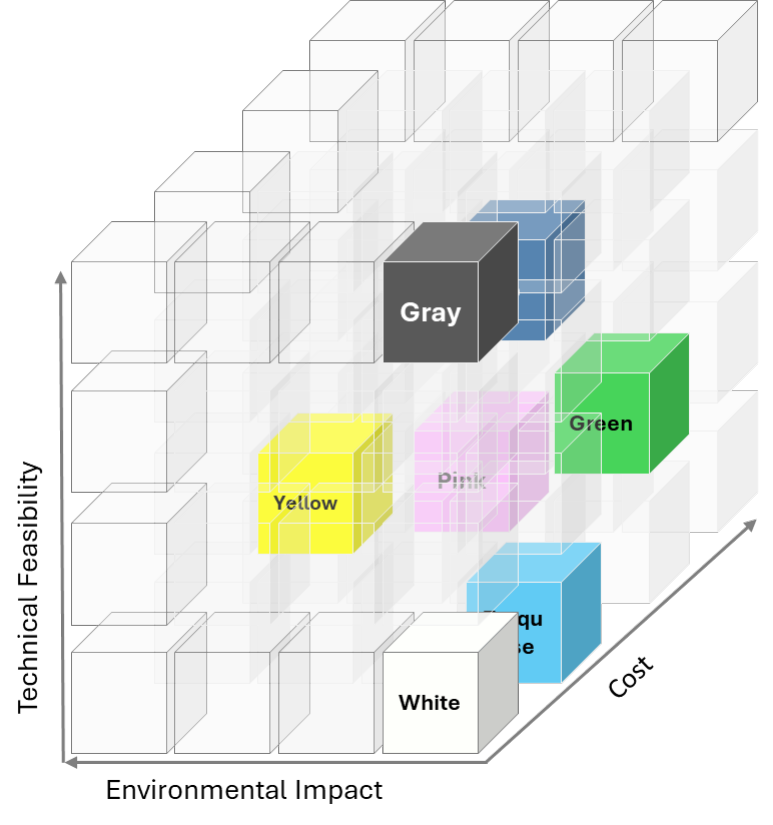
The following graph serves as a framework to evaluate the trade-offs between technological viability, environmental benefits, and economic considerations for each hydrogen production pathway.
In the Gulf Corporation Council (GCC) countries and Iraq, hydrogen development faces both unique challenges and promising opportunities. These nations are heavily reliant on hydrocarbon industries, making them well-positioned to produce blue hydrogen due to their abundant natural gas reserves and established infrastructure for carbon capture and storage (CCS). For example, Saudi Arabia and the UAE have both initiated significant blue hydrogen projects, leveraging their geological formations suitable for CO₂ storage (Hydrogen Council, 2021; IRENA, 2022). However, high CCS costs and the need for substantial technological investments pose challenges for broader adoption across the region, particularly in Iraq, where infrastructure and political stability are more limited (World Bank, 2022).
Green hydrogen presents a major opportunity due to the GCC’s substantial solar potential, offering a pathway to diversify energy portfolios and meet decarbonization goals. Countries like Saudi Arabia and the UAE are investing in large-scale solar plants, which could support green hydrogen production (IRENA, 2021). Oman is also emerging as a green hydrogen hub, with planned projects to serve both domestic and export markets (UNDP, 2021). Yet, green hydrogen development requires high initial investments and extensive renewable energy infrastructure, which may be challenging to implement rapidly in Iraq due to economic and infrastructure constraints (World Bank, 2022). Despite these challenges, the GCC countries and Iraq can leverage their strategic geographic position to access both European and Asian hydrogen markets, creating a competitive export opportunity. With supportive policies and investment in infrastructure, these countries can potentially transition from traditional fossil fuel economies to global leaders in the hydrogen sector, balancing hydrocarbon production with sustainable energy development (Hydrogen Council, 2021).
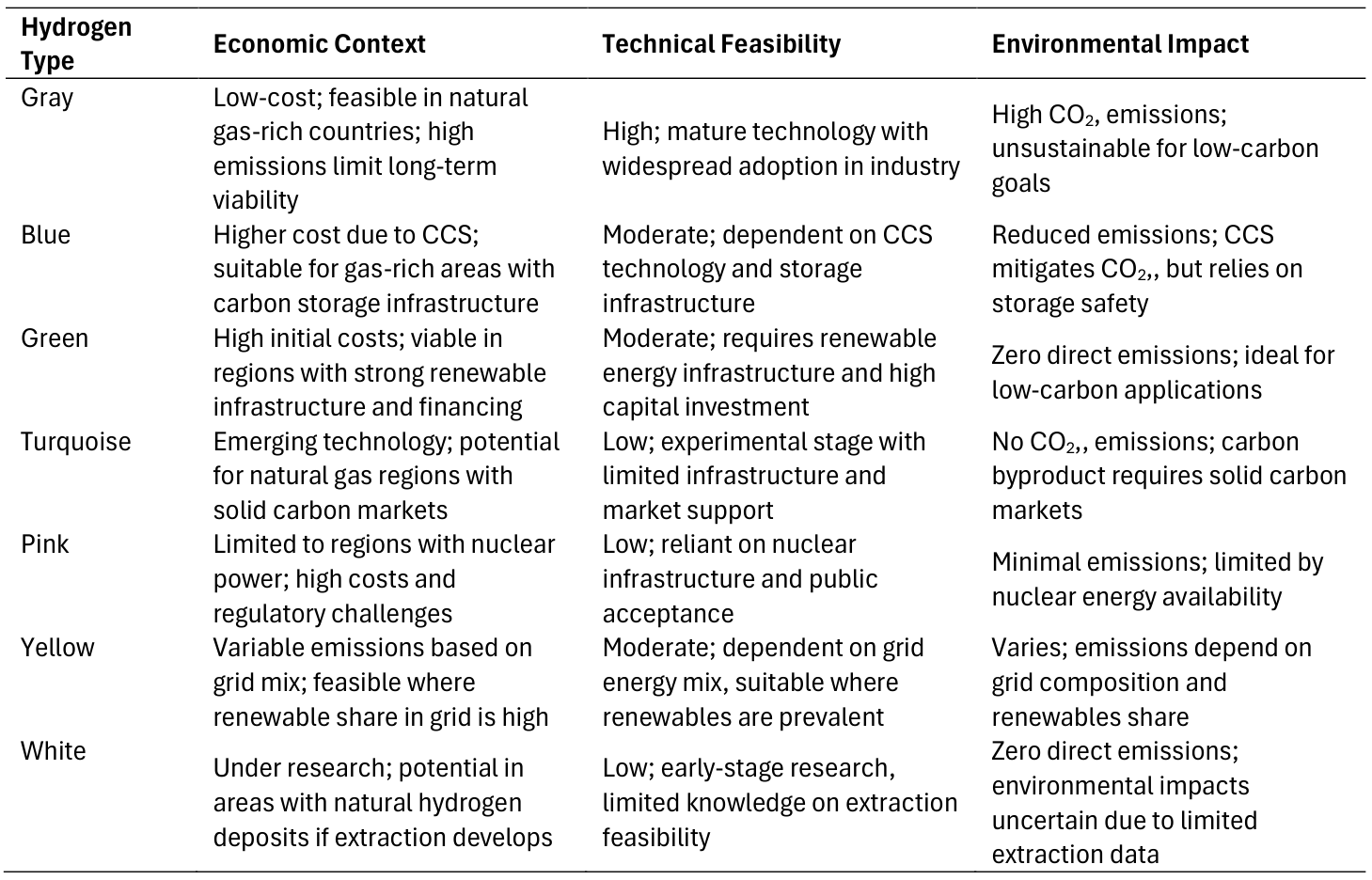
Read figure text
Hydrogen Type Economic Context Technical Feasibility Environmental Impact Gray Low-cost; feasible in natural gas-rich countries; high emissions limit long-term viability High; mature technology with widespread adoption in industry High CO2‚ emissions; unsustainable for low-carbon goals Blue Higher cost due to CCS; suitable for gas-rich areas with carbon storage infrastructure Moderate; dependent on CCS technology and storage infrastructure Reduced emissions; CCS mitigates CO2‚‚ but relies on storage safety Green High initial costs; viable in regions with strong renewable infrastructure and financing Moderate; requires renewable energy infrastructure and high capital investment Zero direct emissions; ideal for low-carbon applications Turquoise Emerging technology; potential for natural gas regions with solid carbon markets Low; experimental stage with limited infrastructure and market support No CO2‚‚ emissions; carbon byproduct requires solid carbon markets Pink Limited to regions with nuclear power; high costs and regulatory challenges Low; reliant on nuclear infrastructure and public acceptance Minimal emissions; limited by nuclear energy availability Yellow Variable emissions based on grid mix; feasible where renewable share in grid is high Moderate; dependent on grid energy mix, suitable where renewables are prevalent Varies; emissions depend on grid composition and renewables share White Under research; potential in areas with natural hydrogen deposits if extraction develops Low; early-stage research, limited knowledge on extraction feasibility Zero direct emissions; environmental impacts uncertain due to limited extraction data
5. Hydrogen Technologies and Climate Change
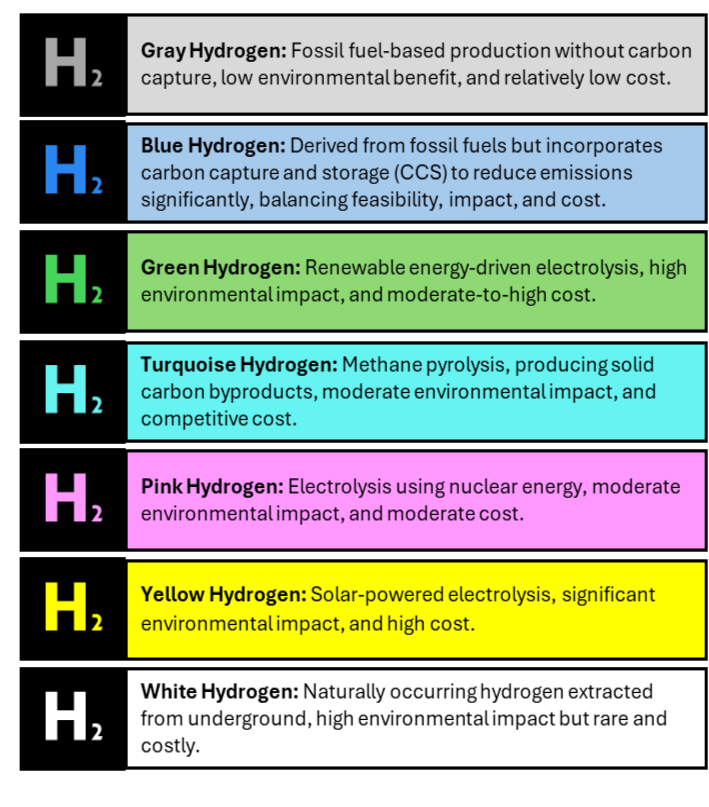
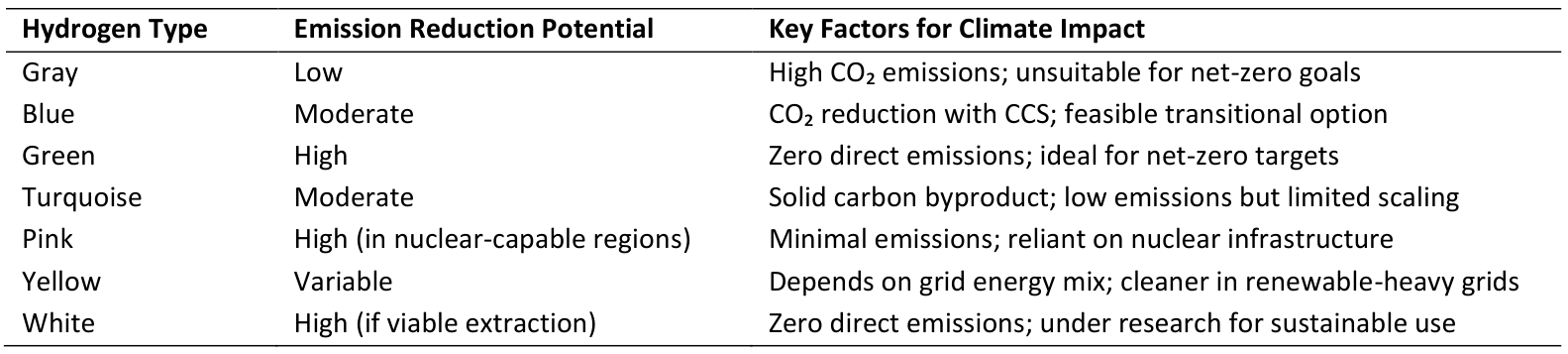
Hydrogen technologies play a crucial role in mitigating climate change by providing a cleaner alternative to fossil fuels in sectors that are challenging to decarbonize, such as heavy industry, transportation, and energy storage. Each hydrogen production method has a distinct carbon footprint, influencing its potential impact on reducing greenhouse gas (GHG) emissions.
Gray hydrogen, the most widely produced type, contributes significantly to CO₂ emissions due to its reliance on natural gas and lack of carbon capture mechanisms. This high emissions profile makes gray hydrogen incompatible with climate goals focused on net-zero carbon targets (International Energy Agency, 2019). Transitioning from gray to cleaner hydrogen types is essential for minimizing the carbon impact of hydrogen use.
Blue hydrogen offers a lower-emission alternative by integrating carbon capture and storage (CCS) with steam methane reforming (SMR), capturing up to 90% of the CO₂ emissions generated. Although blue hydrogen’s emissions are not zero, it provides a transitional solution for industries reliant on natural gas, particularly in regions with suitable CO₂ storage capacities (Staffell et al., 2019). However, CCS technology is still costly and energy-intensive, raising concerns about long-term sustainability.
Green hydrogen holds the highest potential for climate impact reduction, as it is produced through water electrolysis powered by renewable energy sources, resulting in zero direct emissions. Green hydrogen’s role is particularly promising in areas with abundant renewable resources, as it could support the decarbonization of high-emission sectors like steel, cement, and transportation (U.S. Department of Energy, 2020). However, the scalability of green hydrogen is currently constrained by the availability and cost of renewable energy infrastructure.
Turquoise hydrogen is another low-emission option, using methane pyrolysis to split methane into hydrogen and solid carbon, avoiding CO₂ emissions in the process. While this method is still in its developmental phase, it shows promise in regions where solid carbon can be utilized in industrial applications, adding a new dimension to hydrogen’s climate compatibility (Hydrogen Council, 2021).
Pink hydrogen, produced via nuclear-powered electrolysis, and yellow hydrogen, produced from grid-based electricity, offer additional flexibility. Pink hydrogen provides a steady, low-emission hydrogen source in regions with nuclear energy, while yellow hydrogen’s emissions vary depending on the grid mix. These technologies can contribute to climate goals, especially in countries with a low-carbon grid or nuclear capacity (IRENA, 2021).
White hydrogen, a naturally occurring form, could also offer a low-emission solution if viable extraction methods are developed. As of now, white hydrogen remains largely unexplored but could serve as a sustainable hydrogen source with minimal environmental impact if research advances (He, 2020).
By providing carbon-free or lower-carbon alternatives, hydrogen technologies have significant potential to aid global decarbonization efforts. However, realizing this potential will depend on continued advancements in renewable energy infrastructure, CCS technology, and the development of hydrogen storage and distribution systems.
Read figure text
Table 3: Emission Reduction Potential of Hydrogen Technologies by Color Hydrogen Type Emission Reduction Potential Key Factors for Climate Impact Gray Low High CO₂ emissions; unsuitable for net-zero goals Blue Moderate CO₂ reduction with CCS; feasible transitional option Green High Zero direct emissions; ideal for net-zero targets Turquoise Moderate Solid carbon byproduct; low emissions but limited scaling Pink High (in nuclear-capable regions) Minimal emissions; reliant on nuclear infrastructure Yellow Variable Depends on grid energy mix; cleaner in renewable-heavy grids White High (if viable extraction) Zero direct emissions; under research for sustainable use
6. Conclusion and Recommendations
Conclusion
Hydrogen technology represents a versatile and promising avenue for decarbonizing high-emission sectors and transitioning to a more sustainable global energy system. The spectrum of hydrogen production methods— gray, blue, green, turquoise, pink, yellow, and white— offers a variety of options, each with distinct technical and environmental characteristics. While gray hydrogen remains prevalent due to its low cost and widespread availability, its high emissions make it unsuitable for long-term climate goals. Blue hydrogen offers a transitional solution by incorporating carbon capture, although its sustainability depends on further CCS advancements. Green hydrogen, with its zero-emission production process, holds the greatest potential for aligning with net-zero targets, particularly in regions with abundant renewable resources. Emerging technologies like turquoise and white hydrogen offer additional opportunities but require further development for widespread adoption.
For countries in the MENA and Africa regions, where unique geographic and economic contexts present specific challenges, the successful adoption of hydrogen technologies will require a tailored approach. Gas-rich countries can leverage blue hydrogen as a transitional technology, while regions with high solar potential, such as North Africa and the GCC, are well-positioned to capitalize on green hydrogen. In developing regions, addressing infrastructural limitations, access to financing, and policy support will be essential to support the growth of a sustainable hydrogen economy.
General recommendations
- Policy and Regulatory Support: Governments should establish clear regulatory frameworks and incentives for hydrogen technology development, including subsidies for green and blue hydrogen, carbon pricing mechanisms, and investment in renewable infrastructure to support green hydrogen production.
- Investment in Infrastructure and Innovation: Large-scale hydrogen deployment requires robust infrastructure, including production facilities, storage, and distribution networks. Public and private sector collaboration should focus on building hydrogen hubs, developing CCS technology for blue hydrogen, and advancing solid carbon markets for turquoise hydrogen.
- Promoting International Collaboration: Cross-border partnerships can help mobilize financial resources and share technical expertise, especially in developing countries. Collaborations with hydrogen leaders, such as the EU, can facilitate knowledge transfer and create export opportunities for regions like the MENA, where hydrogen production potential is high.
- Supporting R&D for Emerging Technologies: Investment in research and development (R&D) is essential for scaling emerging hydrogen technologies like turquoise and white hydrogen. R&D initiatives should focus on enhancing the efficiency and economic viability of these methods, enabling more regions to integrate low-carbon hydrogen into their energy portfolios.
- Public Education and Workforce Development: Developing a skilled workforce is critical to supporting hydrogen technology infrastructure and operations. Educational programs, technical training, and community outreach will be important to build public support, particularly in regions considering the adoption of nuclear-based pink hydrogen.
By adopting a strategic, region-specific approach to hydrogen technologies, countries can capitalize on their natural resources, economic strengths, and existing infrastructure to create a cleaner, more resilient energy future. With sustained investment and regulatory support, hydrogen has the potential to become a cornerstone of the global transition toward sustainable energy and climate resilience.
7. References
- Abánades, A. (2020). Hydrogen production from methane pyrolysis (turquoise hydrogen): A possible bridge between natural gas and renewable hydrogen. International Journal of Hydrogen Energy, 45(15), 8310-8320.
- Ball, M., & Wietschel, M. (2009). The Hydrogen Economy: Opportunities and Challenges. Cambridge University Press.
- Bensaid, S., et al. (2021). Hydrogen production from renewable resources in the MENA region: Challenges and perspectives. Renewable and Sustainable Energy Reviews, 144, 110-125.
- Bockris, J. O. M. (2002). The Hydrogen Economy: Its History and Prospects. Science and Public Policy, 29(1), 31-37.
- Carroll, B. W., & Ostlie, D. A. (2017). An Introduction to Modern Astrophysics. Cambridge University Press.
- Glasstone, S. (2013). Sourcebook on the Hydrogen Economy. Elsevier.
- Glasstone, S., & Sesonske, A. (2014). Nuclear Reactor Engineering: Reactor Systems Engineering. Springer.
- He, Y. (2020). Naturally occurring hydrogen: A new frontier in energy. Renewable Energy, 145, 1625-1632.
- Hydrogen Council. (2021). Hydrogen Insights Report 2021. Retrieved from HydrogenCouncil.com
- International Atomic Energy Agency. (2020). Nuclear Power and the Clean Energy Transition. Retrieved from IAEA.org
- International Energy Agency. (2019). The Future of Hydrogen. Retrieved from IEA.org
- International Energy Agency. (2021). Hydrogen in North Africa. Retrieved from IEA.org
- International Renewable Energy Agency. (2021). The Role of Hydrogen in the Energy Transition. Retrieved from IRENA.org
- International Renewable Energy Agency. (2022). Energy Transition in the Middle East and North Africa. Retrieved from IRENA.org
- IRENA. (2021). Green Hydrogen Supply Chain: Morocco as a case study. Retrieved from IRENA.org
- Lutsey, N., & Sperling, D. (2018). The role of advanced transportation technology in developing countries. Annual Review of Environment and Resources, 43, 1-26.
- National Aeronautics and Space Administration. (2021). The Use of Hydrogen in Space Exploration. Retrieved from NASA.gov
- Rostrup-Nielsen, J. R. (2017). Industrial Uses of Hydrogen. Catalysis Today, 103(1-4), 9-15.
- Sharma, S., & Ghoshal, S. K. (2015). Hydrogen the future transportation fuel: From production to applications. Renewable and Sustainable Energy Reviews, 43, 1151-1158.
- Smil, V. (2017). Energy and Civilization: A History. MIT Press.
- Speight, J. G. (2020). The Chemistry and Technology of Petroleum. CRC Press.
- Staffell, I., Scamman, D., Abad, A. V., et al. (2019). The role of hydrogen and fuel cells in the global energy system. Energy & Environmental Science, 12(2), 463-491.
- Tollefson, J. (2021). How green is blue hydrogen? Nature, 597, 15-17.
- Turner, J. A. (2004). Sustainable hydrogen production. Science, 305(5686), 972-974.
- U.S. Department of Energy. (2020). Hydrogen Program Plan. Retrieved from DOE.gov
- UNIDO. (2022). Namibia’s Green Hydrogen Future. Retrieved from UNIDO.org
- United Nations Development Programme. (2021). Oman’s Pathway to Green Hydrogen Leadership. Retrieved from UNDP.org
- World Bank. (2022). Energy Infrastructure Challenges in the Middle East. Retrieved from WorldBank.org
- Züttel, A. (2003). Materials for hydrogen storage. Materials Today, 6(9), 24-33.
Related Content
Sudan's Energy Balance 2020
Sudan’s energy balance for the year 2020 had shown lower figures from previous years trends, while maintaining largely the same proportions of energy supply resources,
Read Article →Scope 4 Emissions: The Concept of Avoided Emissions
In the global effort to combat climate change, the focus has traditionally been on reducing greenhouse gas (GHG) emissions from corporate operations and value chains.
Read Article →The Imperative for ESG Readiness Tools: Unlocking Benefits for Companies, Institutions, and Society
Environmental, Social, and Governance (ESG) considerations have evolved from being a corporate trend to becoming essential criteria for sustainable and ethical growth.
Read Article →