

Green Credit Lines in the Gulf Cooperation Council: Evaluating Opportunities, Overcoming Challenges, and Assessing the Impact on Energy Transition in
Green Credit Lines in the Gulf Cooperation Council: Evaluating Opportunities, Overcoming Challenges, and Assessing the Impact on Energy Transition in
Read the original archive edition (PDF)
Abstract
This study explores the potential of Green Credit Lines (GCLs) as a tool for accelerating the transition towards a sustainable economy in Qatar, a nation with ambitious renewable energy (RE) targets. Building upon existing literature, the study has developed a comparison method to assess the potentiality of establishing and operating GCLs within Gulf Cooperation Council (GCC), named GCL Implementation Potential Index (GCLIPI). The GCLIPI incorporates three factors. The first factor, Financial Institutions Performance, evaluates the readiness of financial institutions (FIs) based on their financial performance and commitment to sustainability. The second factor, the Governmental Frameworks, examines the supportive governmental frameworks, encompassing national green finance strategies, GCL regulations, and green building standards. The third factor, the FIs Internal Capacities, assesses the capacities of financial institutions to manage and execute GCL programs effectively, this includes, the FIs technical expertise in green project assessments, and the availability of a robust green projects pipeline. Factors including Financial Institutions Performance, Governmental Frameworks, and FIs Internal Capacities are qualitatively assessed to judge the potentiality of establishing GCLs by the FIs. Based on that, a GCL Potential Impact Indicator (GCPII) is introduced to combining the GCLIPI with the RE Target Ambitiousness of Qatar's to assess the potential energy transition impact of GCLs. The study considers the broader context of gulf region by conducting a comparison between Qatar, the United Arab Emirates (UAE) and Saudi Arabia (KSA). The study reveals that the UAE is the only country among the three with existing GCL products, providing them with a demonstrably earlier stage of implementation. All three countries share promising green projects pipelines and ambitious RE targets, with Qatar's target being the most ambitious. Analyzing GCL implementation potential alongside RE target ambition reveals Qatar could experience a significant impact from GCLs. However, limitations in Qatar's governmental frameworks compared to KSA require strategic development to unlock its full GCL potential. By prioritizing the development of supportive green finance frameworks and regulations, Qatar can bridge the gap with its competitors and leverage GCLs to achieve its ambitious clean energy goals.
Keywords: Green Credit Lines (GCLs), Renewable energy (RE), Energy Transition, GCL Implementation Potential Index (GCLIPI), GCL Potential Impact Indicator (GCLPII), Financial sector, Qatar, GCC.
Introduction
The financial sector’s mandate is to manage risk, allocate capital, mobilize savings and –as a financial intermediary– manage risk and maturity transformation and convenience denomination, all at the lowest possible transaction costs. It can have either an enabling role in the transition to a sustainable world or a hampering role depending on its actions[2].
The public sector does and will still play the leading role in commissioning green infrastructure projects and to guide and “jump start” investment when needed. But transformational change will ultimately require large-scale private sector engagement [3]. The transition requires a structural change in the financing patterns in terms of finance tenor and the result orientation to enable the private sector, including small and medium enterprises (SMEs) and Large Enterprises (LEs) to have a viable business case for green and RE projects. However, a clear distinction between 'green' and 'brown' investments is essential to ensuring transparency and effectiveness in green finance.
Green Credit Lines (GCLs) are specifically designed to finance environmentally sustainable projects, such as renewable energy, energy efficiency, and pollution control, while conventional or "brown" investments typically fund projects associated with high carbon emissions, like fossil fuel extraction or traditional infrastructure developments. The key difference lies in the purpose and criteria: GCLs prioritize environmental benefits, offering favorable terms (e.g., lower interest rates, longer repayment periods) to encourage green projects, whereas brown investments focus on profitability without necessarily considering environmental impacts. Additionally, GCLs often adhere to strict sustainability standards and frameworks, ensuring alignment with global climate goals, while brown investments may contribute to environmental degradation through activities that increase carbon emissions and harm natural ecosystems.
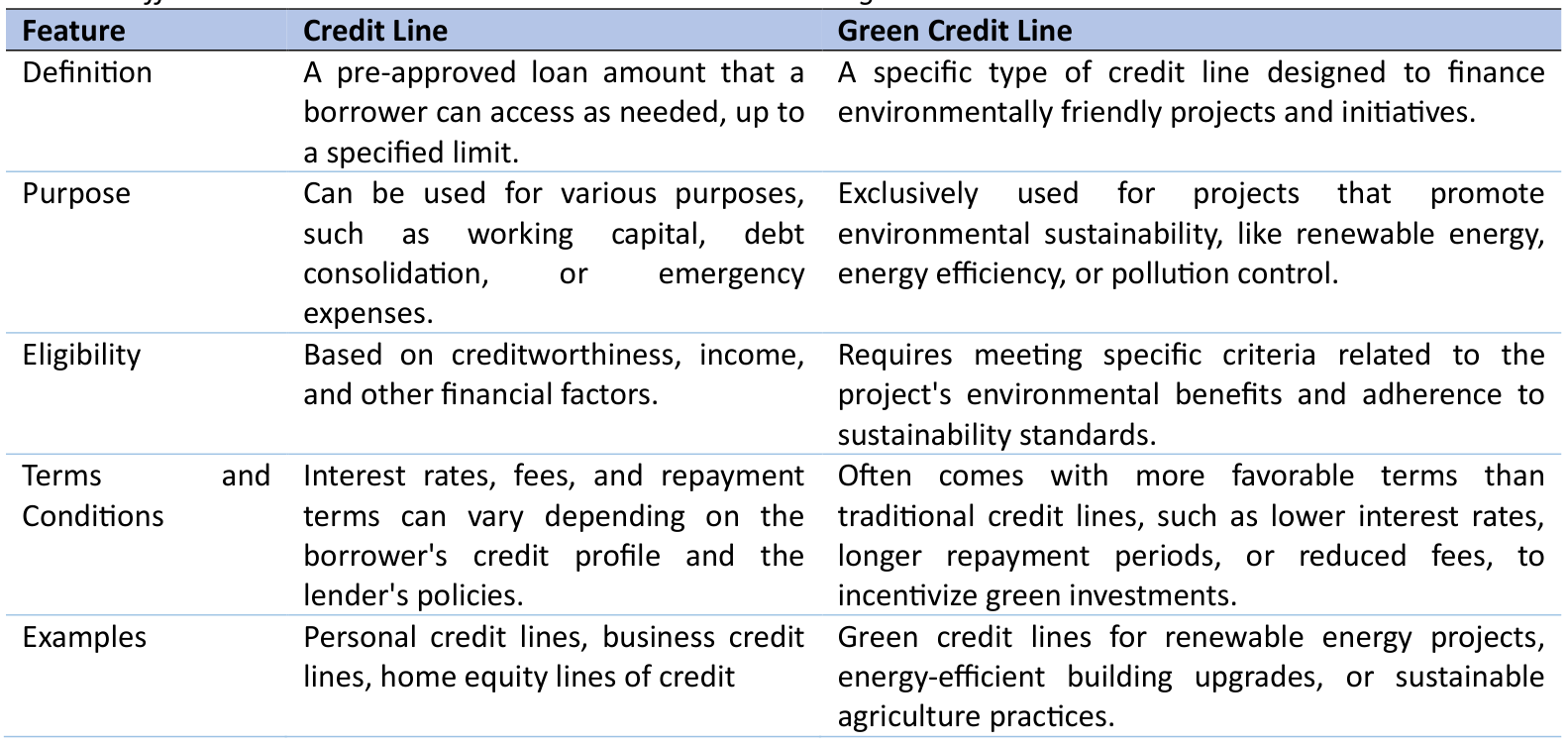
The following table compare between the conventional credit line and the GCL.
Read figure text
Table 1: Difference between the conventional credit line and the green credit line Feature Credit Line Green Credit Line Definition A pre-approved loan amount that a borrower can access as needed, up to a specified limit. A specific type of credit line designed to finance environmentally friendly projects and initiatives. Purpose Can be used for various purposes, such as working capital, debt consolidation, or emergency expenses. Exclusively used for projects that promote environmental sustainability, like renewable energy, energy efficiency, or pollution control. Eligibility Based on creditworthiness, income, and other financial factors. Requires meeting specific criteria related to the project's environmental benefits and adherence to sustainability standards. Terms and Conditions Interest rates, fees, and repayment terms can vary depending on the borrower's credit profile and the lender's policies. Often comes with more favorable terms than traditional credit lines, such as lower interest rates, longer repayment periods, or reduced fees, to incentivize green investments. Examples Personal credit lines, business credit lines, home equity lines of credit Green credit lines for renewable energy projects, energy-efficient building upgrades, or sustainable agriculture practices.
The GCC economies have been heavily reliant on oil and gas export revenues, with a narrow export profile dominated by oil and gas. World Bank data ranks Qatar, Kuwait, the UAE and Bahrain in positions one-to-four for the highest per capita emissions, with Saudi Arabia 10th and Oman 12th [4]. While Qatar’s per capita emissions are the highest in the world, its small population means that total emissions are lower than those of Saudi Arabia and the UAE [5]. The GCC countries have progressively joined global forces to addressing climate change. They signed and ratified the Paris Climate Agreement and have submitted nationally determined contributions (NDCs) to the United Nations Framework Convention on Climate Change (UNFCCC), outlining their goals for mitigating and adapting to climate change. Notably, all GCC countries have pledged to achieve a net-zero target by the middle of the century. As of 2021, comprehensive national climate strategies, including adaptation ambitions, have been publicly declared by only three GCC states: the UAE, Oman, and Saudi Arabia [6]. Among them, Qatar’s NDCs were submitted to UNFCCC in November 2021, showing that the country is committed to reducing its Greenhouse Gases (GHG) emissions by 25% compared to 1 a baseline scenario by 2030. However, this is a complex challenge given Qatar’s heavy dependence on oil and gas hydrocarbons’ production, transformation, and consumption, which contribute significantly to nation’s gross domestic product and overall wealth [7].
Large-scale projects require significant capital to develop and implement innovative technologies that can reduce emissions on a national scale. Simultaneously, SMEs play a vital role in the energy transition by fostering innovation and adopting sustainable practices at a smaller scale [8]. Therefore, ensuring adequate funding for both large and small energy projects is essential. This financial support will enable the deployment of cutting-edge technologies and sustainable practices necessary for reducing emissions, allowing Qatar and other GCC countries to effectively achieve the energy transition and contribute to global climate goals [9].
Green finance instruments, such as green bonds, green loans, grants, and carbon markets, are designed to fund projects that promote environmental sustainability and address climate change. Among these, GCLs stand out as impactful tools, providing pre-approved financing with favorable terms for green projects like renewable energy and energy efficiency. By offering lower interest rates, longer repayment periods, and technical assistance, GCLs help overcome funding barriers, particularly for SMEs enabling faster adoption of sustainable practices.
The study adopts a comprehensive approach that includes a literature review and a conceptual framework to define and explain the opportunities and challenges of establishing GCLs by the FIs. It also presents a methodology for assessing the impact of GCLs mechanisms on Qatar's energy transition goals. By examining publicly available and historical data, the study aims to evaluate the progress of establishing GCLs in the GCC, with a particular focus on Qatar.
To measure the potential and impact of GCLs establishment by the FIs, the study introduces two metrics: (1) an index to assess the potential of the country to successfully implement green credit programs based on its existing financial and regulatory infrastructure, and (2) an indicator which measures the expected influence of implementing GCL by the FIs within the country on advancing energy transition goal. These metrics will explore various aspects, including the performance of the FIs, Governmental Framework, Internal capacities, and the energy transition target which are assessed qualitatively to judge the potentiality and impact of establishing GCLs.
The study enriches its findings by comparing Qatar, the United Arab Emirates (UAE), and Saudi Arabia (KSA). This comparative analysis aims to draw lessons from the sustainable finance experiences of these three countries. This provides a comprehensive perspective on the factors that may hinder or facilitate the success of GCLs in the GCC region.
Literature Review
Energy Transition Challenges in Qatar and the GCC
Founded in 1981, the GCC council countries, Bahrain, Kuwait, Oman, Qatar, Saudi Arabia and United Arab Emirates, together, covers a total area of 2410 km2, has population of about 47 million and a GDP of $ 1.6 trillion or about $ 33,300 per capital [10]. The GCC countries ranked among the highest countries in term of energy consumption per capita. Qatar ranked first, followed by Kuwait, United Arab Emirates, Bahrain, Oman and Saudi Arabia. In comparison, the per capita energy consumption in Qatar is 4 times that in the United Kingdom and 20 times the average Indians per capita energy consumption. This can be attributed to the harsh climate in the GCC region leading to high demand for air conditioning and cooling throughout the year. For instance, Qatar's per capita electricity consumption reaches approximately 17,500 kWh annually, with a significant portion dedicated to cooling, especially during peak summer months [11]. In contrast, colder countries like Germany exhibit lower per capita energy consumption for heating, averaging around 130-150 kWh/m² per year, thanks to better insulation, energy-efficient building designs, and a more diverse energy mix that includes renewables [12]. For example, the Passivhaus standard in Germany reduces heating energy needs to as low as 15 kWh/m² annually [13]. This difference in energy demand highlights the efficiency and sustainability challenges faced by the GCC, where the reliance on electricity for cooling contrasts sharply with the more varied and efficient energy strategies in colder regions [14]. Also, low fuel prices over the past decades led to higher energy demand and less efficient energy use in the GCC countries [15].
The energy consumption across the GCC region showed an average annual growth rate (AAGR) of 6 percent to 7 percent, largely driven by the residential sector (which accounts for about 44 percent of the region’s total consumption) [16]. Although GCC countries are not the world’s largest emitters in terms of total GHG emissions and total GHG emissions per GDP, several Gulf countries fall in the top 10 emitters in terms of GHG emissions per capita. Despite that GCC countries collectively contribute about 2.7% of global greenhouse gas (GHG) emissions due to its oil and gas production [17], they have embarked in wide-ranging reforms to achieve socio-economic transformation. As shown in Qatar National Vision 2030, Vision 2030 of Saudi Arabia, “We the UAE 2031”, Oman Vision 2040. Main progress areas are social and business-friendly reforms, efforts to enhance sustainability and resilience, investments in strategic industries and digital and green infrastructure [18]. All the GCC countries are progressing with the SDGs’ agenda implementation and four of the countries have already exceeded two-thirds of the overall SDG score, Qatar being one of them [19]. The Gulf Arab states have already taken steps and developed institutional architecture conducive to mitigating the effects of climate change. Before the announcement of net-zero commitments, each GCC state launched initiatives, regulations, and programs intended to mitigate different aspects of climate change impacts [20].
Qatar is taking a range of actions to reduce its greenhouse gas emissions; Qatar ratified the Kyoto Protocol in 2005 and submitted an initial National Communication to the UNFCCC in 2011. In 2012, Qatar demonstrated its leadership role and support for global action on climate change action by hosting the 18th Conference of Parties (COP18) to the UNFCCC and submitted the Updated First NDC in 2021. In terms of the impact of the climate change, Qatar’s ND-GAIN Indicator rank is 38. It is the 139th most vulnerable country and the 44th most ready country. The low vulnerability score and high readiness score of Qatar places it in the lower-Bottom quadrant of the ND-GAIN Matrix, which means that adaptation challenges still exist, but Qatar is well positioned to adapt [21]. The next table presents an overview of Qatar's strategic initiatives aimed at sustainable development and climate action.
In their recent National RE strategy, Qatar focuses in three main objectives: (1) Reduce GHG emissions through sustainable policies and trends targeting 10% reduction in the annual GHG emissions, (2) Increase RE penetration while maintaining network reliability targeting to increase RE share in the power mix from its current 5% to 18% by 2030 by 2030, and (3) Maximize the socio-economic contribution from its RE targeting reduction in the average cost of electricity generation by 15% by 2030 program.
In conclusion, the literature review highlights the pressing energy challenges facing Qatar and the broader GCC region, characterized by high energy consumption per capita, significant greenhouse gas emissions, and a growing imperative for sustainable development. Moreover, there exists a pronounced ambition towards RE targets, signifying a pivotal shift towards a more sustainable and resilient energy future.
The Role of the Financial Sector and GCL
Several empirical studies have shown that the financial sector can play an important role in reducing GHG emissions. Financial firms’ ability to secure and allocate funds, and manage financial risks, are recognized as an essential in response to climate change risks [22]. Financial firms are adapting their traditional financial purpose, function, and philosophy, to change financial decision activities and products to reflect climate change risks and sustainability aims [23]. However, several barriers currently inhibit green lending in developing countries. GCL is considered useful in addressing some of these barriers to green lending, for example, an unfavorable investment environment can hinder the competitiveness of green investments compared to traditionalal ternatives. This lack of competitiveness stems from several factors. One major issue is the high upfront capital required for green projects, such as renewable energy plants, which often exceeds the initial costs of conventional fossil fuel investments. These projects also tend to have longer payback periods, making them less attractive to investors looking for quicker returns [24].
Additionally, the fossil fuel industry in many developing countries benefits from significant subsidies, creating market distortions that make it difficult for green projects to compete on a level playing field [25]. Another challenge is the lack of financial instruments, such as risk guarantees, which increases the perceived financial risk of green investments, further reducing their appeal to potential investors [26].
Also, challenges include a lack of viable projects, insufficient demand for financing, and limited financial knowledge and products [27]. While the availability of finance through GCLs is crucial, it is not a standalone solution. If viable projects are lacking, the effectiveness of available financing is limited. However, GCLs can stimulate project development by offering technical assistance aimed at helping project developers structure bankable green projects. GCLs serve a dual purpose as a financial tool. Firstly, they aim to facilitate lending to projects with environmental 3 benefits. Secondly, they seek to enhance the capacity of local FIs to expand the local green lending market[27]. Under a GCL arrangement, funds are typically provided by a public financial institution whether its national or international to participating local FIs, who then lend them to developers of eligible green projects (SMEs and Large Enterprises (LEs)). The eligibility of green projects is generally determined by either the public financial institution providing the funds or by adhering to internationally recognized frameworks such as the Green Bond Principles or standards set by the Climate Bonds Initiative. These frameworks ensure that projects align with global environmental goals, such as reducing carbon emissions or promoting renewable energy. This support helps build a pipeline of viable projects, thereby bridging the gap between available finance and project readiness [28]. GCLs play a pivotal role in overcoming supply-side barriers by providing dedicated financing for green projects and leveraging the intermediation function of FIs [27][29]. Additionally, GCLs may encompass technical assistance funded by the participated FIs, aimed at enhancing the capacity of local banks to finance green investment projects and/or assisting end-borrowers in structuring investment proposals.
Recent developments in the taxonomy of the Green Loan Principles (GLP) provide clear guidelines for distinguishing between green and brown projects. The GLP taxonomy, established by the Loan Market Association, outlines specific criteria that projects must meet to be considered environmentally sustainable. These criteria include improvements in energy efficiency, significant reductions in greenhouse gas emissions, and the promotion and development of renewable energy sources [30]. For instance, projects aimed at enhancing energy efficiency might involve upgrading to energy-efficient appliances or retrofitting buildings to reduce energy consumption. Renewable energy projects could include the development of solar farms, wind energyinstallations, or hydroelectric power stations [30]. Similarly, the EU Taxonomy for Sustainable Activities provides a comprehensive framework for classifying environmentally sustainable economic activities. It includes detailed criteria across six environmental objectives, ensuring a broad and rigorous approach to sustainability [31]. The Climate Bonds Standard and Certification Scheme also offers sector-specific criteria to ensure that projects deliver genuine environmental benefits, particularly in high-impact areas like energy and transport [32].
Conversely, brown projects are characterized by activities that significantly contribute to carbon emissions and environmental degradation. Examples of brown projects include fossil fuel extraction, coal mining, and the development of new oil and gas infrastructure. These activities are not aligned with the sustainability goals outlined by the GLP and other taxonomies and are typically excluded from green financing. The differentiation between green and brown projects is critical to avoid "greenwashing," where projects are misleadingly marketed as environmentally friendly without meeting the necessary sustainability criteria. Greenwashing can undermine the integrity of green finance and erode investor and public trust. By adhering to established taxonomies such as the GLP, EU Taxonomy, and Climate Bonds Standard, financial institutions can ensure that only genuinely sustainable projects receive green financing, thereby maintaining the integrity of green credit lines. This adherence involves rigorous assessment and verification processes to confirm that projects meet the relevant criteria and deliver the intended environmental benefits [31] [32].
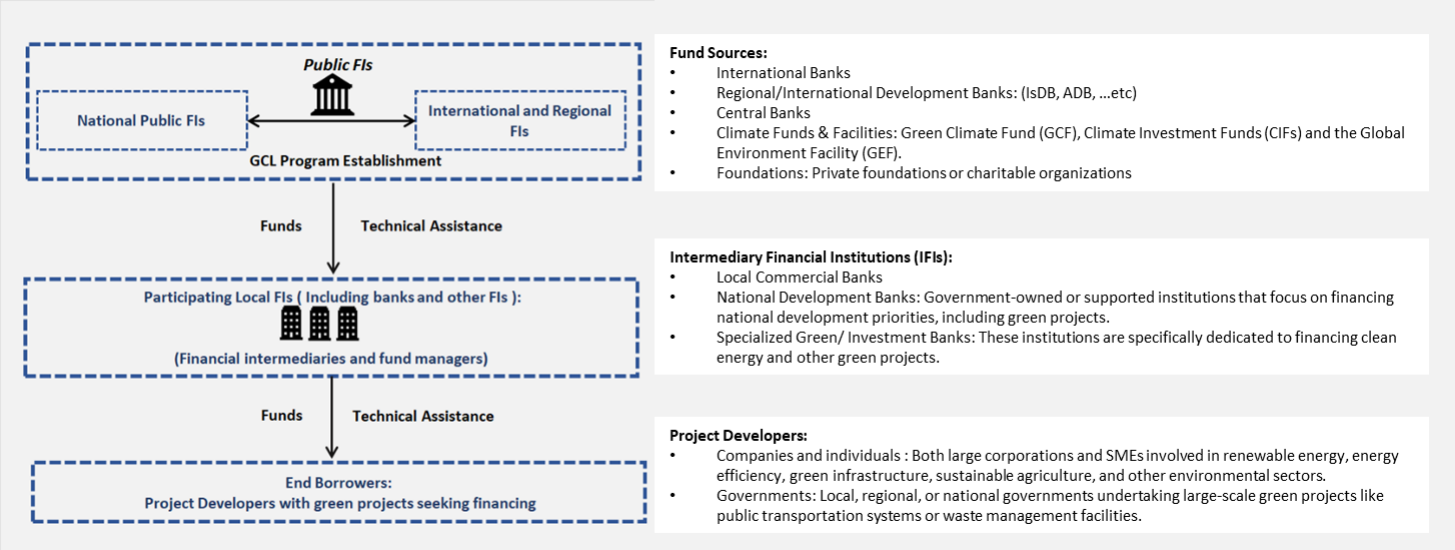
Figure 5 below illustrates the mechanism of the GCL establishment by FIs.
Impact Assessment
GCLs play a pivotal role in promoting green investments by addressing financial and non-financial barriers throughout the lending process both from the supply and demand sides. Financial incentives embedded in GCLs-typically provided by national or international public financial institutions, such as development banks, government agencies, or international climate funds- such as concessionally and favorable terms, help alleviate supply-side challenges like high costs and perceived risks. Lower interest rates, longer tenors, and grace periods align loan terms with the lifecycle of green projects, thereby enhancing their financial feasibility. Moreover, incentives like performance payments and credit enhancements encourage the adoption of green lending practices among financial intermediaries [34]. Public FIs (such as International Banks, Development Banks, Central Banks, Climate Funds & Facilities, Foundations or charitable organizations) facilitate GCLs by leveraging their access to stable financing and blending commercial finance with concessional contributions, making green lending more appealing. These institutions can mobilize external public finance and private co-financing, thereby expanding the pool of available funds for green projects. However, empirical evidence on the extent to which financial benefits are passed on to end-borrowers remains limited [35]. Non-financial benefits of GCLs are equally significant, with Technical Assistance programs addressing capacity gaps among financial intermediaries and end-borrowers [36].
The Qatari banking sector is increasingly recognizing the importance of environmental sustainability and is actively participating in the green finance movement. This shift aligns with Qatar's National Vision 2030. As a result, several Qatari banks have implemented green finance initiatives to promote environmentally friendly practices among businesses and consumers. According to secondary data published as of May, 2024, GCLs are not yet a green established within the Qatari financial sector.
The below table provides a snapshot of key green finance initiatives offered by leading Qatari banks. It highlights the diverse range of products and services available, serving various segments of the market:
Research Methodology
Research Framework
The paper proposes a conceptual framework to qualitatively assess the potential for GCL establishment by the FIs and its impact on energy transition in Qatar. The framework highlights two metrics:
Green Credit Line Implementation Potential Index (GCLIPI): this index assesses the potentiality of the GCL establishment by the FIs and considers three main factors namely; (1) Financial Institution Performance (based on common aspects specified by frameworks employed by many donors and development banks, such as those used by the World Bank, OECD DAC, IFC, GCF, and ADB), (2) Governmental Frameworks (based on WB, 2023, ADB, 2023), and 4 (3) FIS Internal Capacities (derived from a review of various established GCL programs). While these factors reflect the financial sector's readiness to integrate GCLs into their operations, they represent a preliminary assessment towards a more comprehensive evaluation.
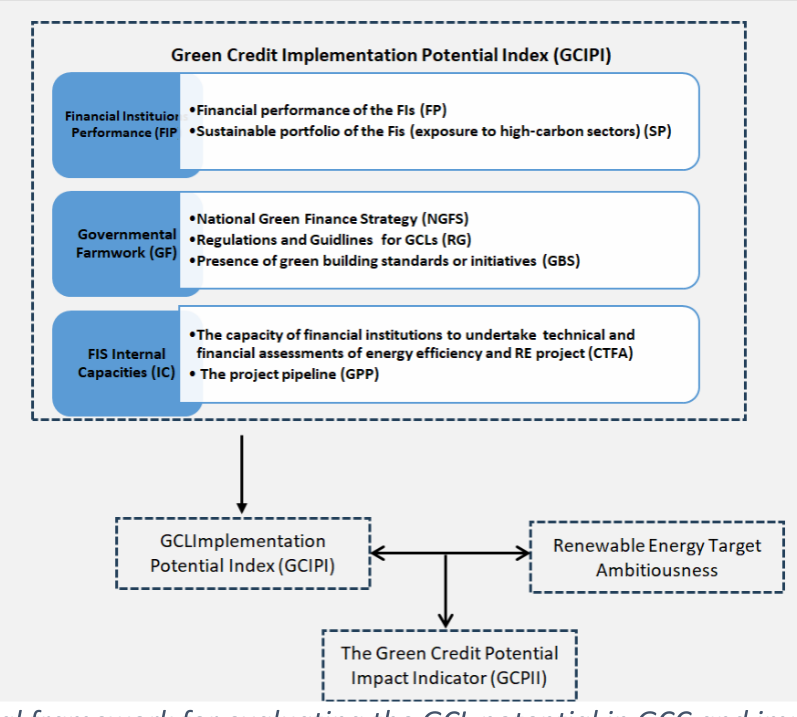
The Green Credit Potential Impact Indicator (GCPII): this indicator aims to provide a preliminary assessment of the potential impact of GCL establishment by the FIs on energy transition.
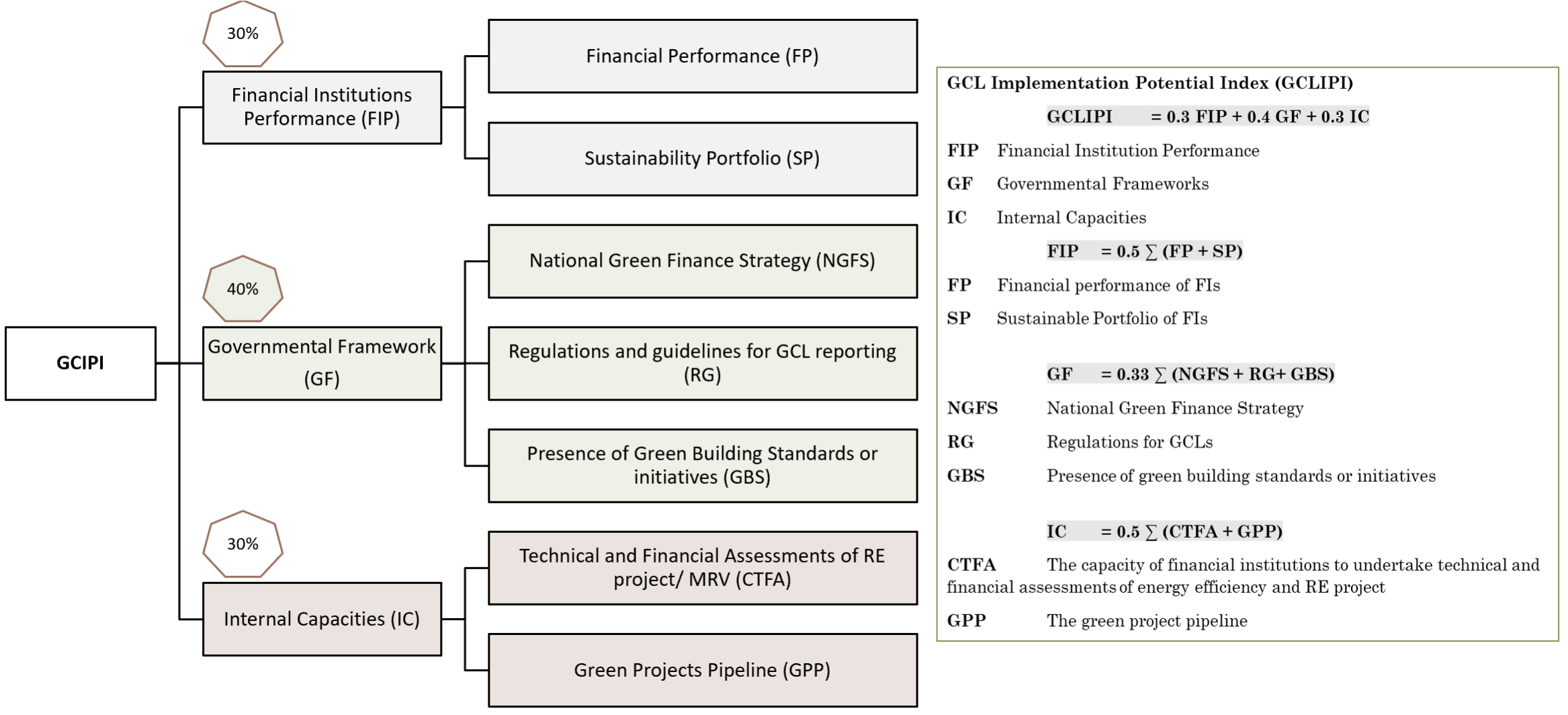
Figure 6 shows that the impact of GCL establishment for a country will be examined by three factors: the performance of financial institutions (FIs) as intermediaries, the overall governmental frameworks, and the internal capacities of the bank regarding the GCL-specific program. To further enrich the assessment, the framework proposes developing a GCL Implementation Potential Index (GCLIPI) for Qatar. This index will aggregate scores based on the three identified factors. Additionally, the GCIPI score for Qatar will be compared with scores calculated for two other GCC countries namely; (UAE) and Saudi Arabia (KSA). This comparative analysis will offer valuable insights into the relative strengths and challenges of each country's GCL potential within the regional context. In addition, to assess the Potential Impact of GCL, the framework incorporates an additional concept: "RE Target Ambitiousness”. This factor, independent of the GCL Potential index, represents a country's level of ambition for increasing its contribution from RE sources. A more ambitious target suggests a stronger commitment toRE, potentially leading to a higher GCL Potential Impact (GCPII) score.
GCL Implementation Potential Index (GCIPI) The GCIPI assesses the potential of a country to successfully implement green credit programs based on its existing financial and regulatory infrastructure.
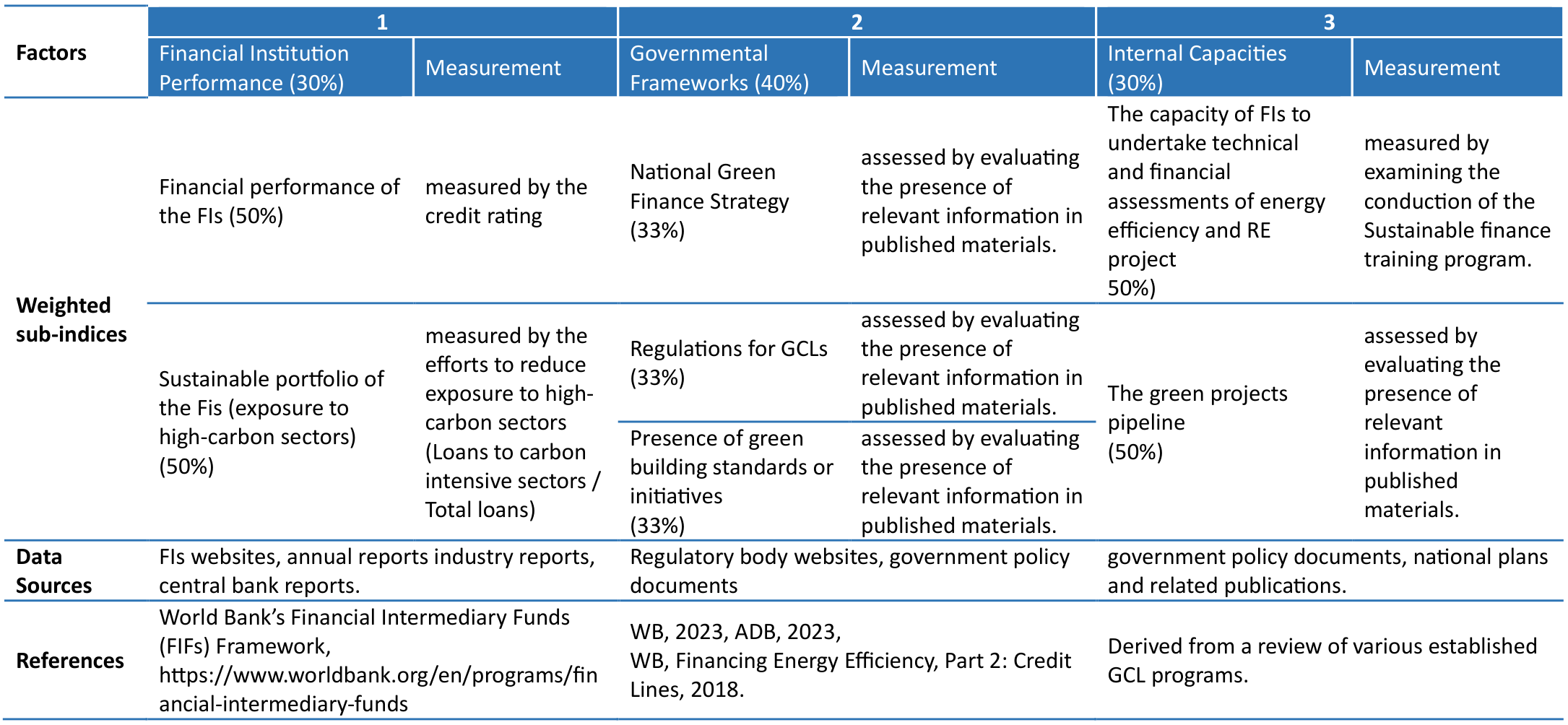
To assess the potential of GCLs in Qatar, the UAE, and KSA, a comparative analysis using GCL Potential Index is proposed. This index utilizes the publicly available information. Table 4 illustrates the GCLIPI factors, sub-indices, measurements and data sources.
The index will be a composite score (0-100) derived from weight of the three factors:
- Financial Institution Performance (30%)
- Governmental Frameworks (40%)
- Internal Capacities (30%)
- The performance of the FIs (30%): Assesses the degree to which FIs are prepared to meet the Credit Line criteria. This factor is weighted at 30% and includes the following sub-indices:
- Financial Performance of the FIs - 50%: this is measured by the "credit rating" of the FIs. Credit rating indicates the institution's ability to meet its financial obligations and reflects the overall financial health and stability of the institution. It is a critical factor in ensuring the trustworthiness and reliability of financial operations.
- Sustainability Portfolio - 50%: refer to the efforts made to reduce exposure to high-carbon sectors. This involves assessing how banks contribute to or mitigate climate change, particularly through their financing decisions. One key metric for this is the ratio of loans to carbon-intensive sectors relative to total loans.
- Governmental Frameworks (40%): this component evaluates the broader policy and regulatory context that supports green finance. This factor is weighted at 40% and includes the following sub-indices:
- National Green Finance Strategy - 33%: measured by the presence of relevant information in published materials is used to assess this variable.
- Regulations for GCLs - Reporting - 33%: similar to the national strategy, this is assessed by evaluating the presence of relevant information in published materials.
- Presence of Green Building Standards or Initiatives - 33%: the assessment is based on the presence of relevant information in published materials.
- Internal Capacities (30%): this component focus on the specific capabilities and activities related to specific GCL programs. This factor is weighted at 30% and includes the following sub-indices:
- Capacity of FIs to Undertake Technical and Financial Assessments of Energy Efficiency and RE Projects - 50%: measured by examining the conduction of sustainable finance training programs.
- Green Projects Pipeline - 50%: assessed by evaluating the presence of relevant information in published materials.
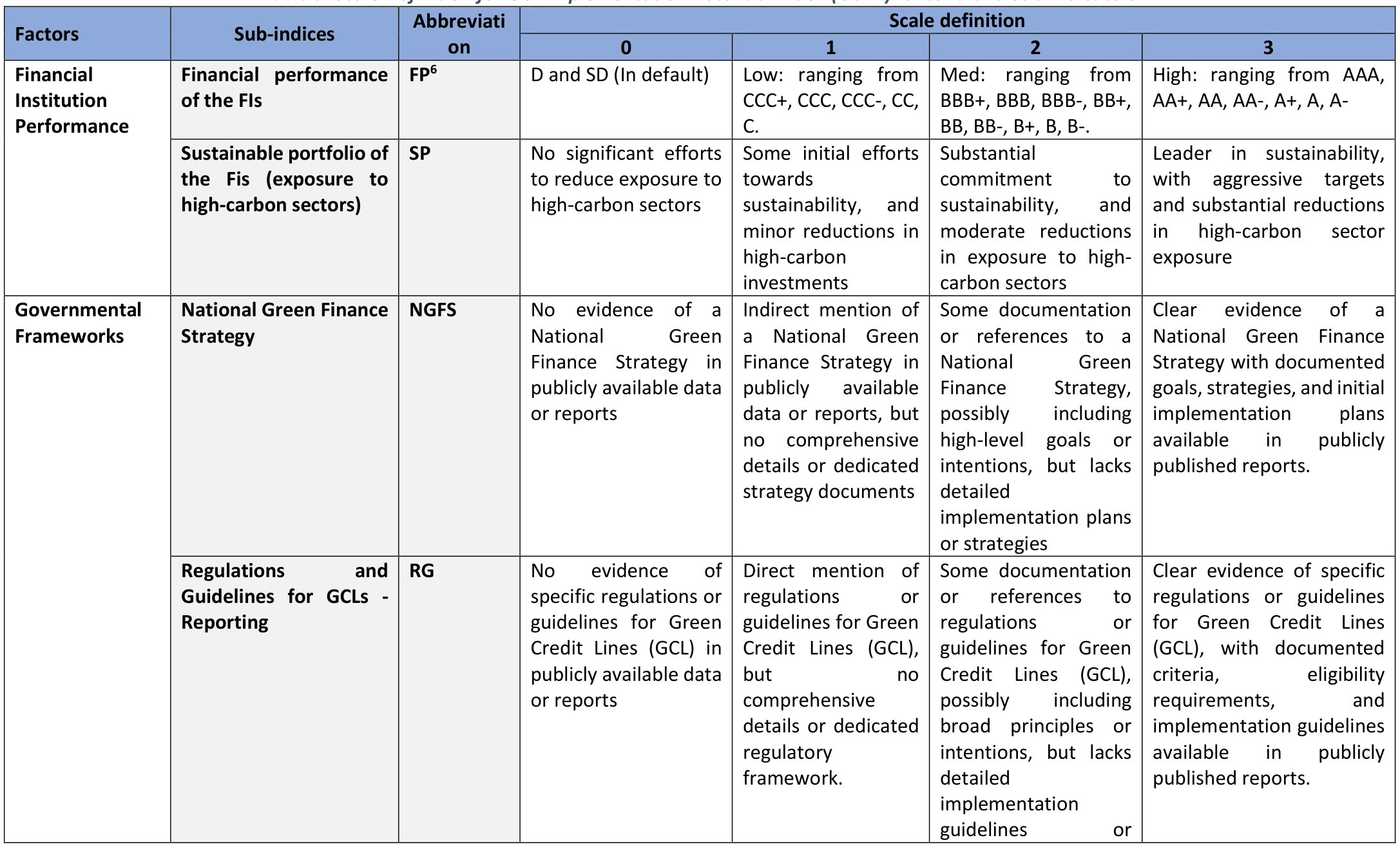
The rationale for assigning these weights is grounded in the recognition of the fundamental importance of the governmental frameworks in ensuring the success and sustainability of the GCLs. Even if the performance and the internal capacities of the FIs fully met, the absence of a supportive governmental frameworks would significantly hinder the effectiveness of the GCLs. Given these insights, the governmental frameworks are prioritized with a 40% weight to reflect its critical role in supporting the GCL's success. The comprehensive assessment of the national green finance strategy, GCL regulatory and guidelines, and green building standards ensures that the foundational conditions necessary for the GCL are in place. The FIS performance is essential for defining the specific eligibility criteria for the FIs, focusing on the financial performance of the FIs and the commitment to the sustainability (exposure to high-carbon sectors). Internal capacities focus on the specific design and implementation aspects of the GCL. This includes the green finance expertise, the availability of the green projects pipeline among other. The sub-indices for each factor are illustrated in Table 4 with relative importance percentage (out of 100%). A pre-defined scoring system (e.g., 0 for no evidence, 1 for limited evidence, 2 for moderate evidence, 3 for strong evidence) will be applied to each sub-indices. Scores for each factor will be calculated and multiplied by their respective weights. The final GCLIPI score for each country will be the sum of the weighted factors scores. The GCLIPI scores will serve as a starting point for assessing the potential impact on the energy transition. The below explanatory note shows the scale definitions, the model equations and the benchmark matrix.
Read figure text
Factors 1 2 3 Financial Institution Performance (30%) Measurement Governmental Frameworks (40%) Measurement Internal Capacities (30%) Measurement Weighted sub-indices Financial performance of the FIs (50%) measured by the credit rating National Green Finance Strategy (33%) assessed by evaluating the presence of relevant information in published materials. The capacity of FIs to undertake technical and financial assessments of energy efficiency and RE project 50%) measured by examining the conduction of the Sustainable finance training program. Sustainable portfolio of the Fis (exposure to high-carbon sectors) (50%) measured by the efforts to reduce exposure to high- carbon sectors (Loans to carbon intensive sectors / Total loans) Regulations for GCLs (33%) assessed by evaluating the presence of relevant information in published materials. The green projects pipeline (50%) assessed by evaluating the presence of relevant information in published materials. Presence of green building standards or initiatives (33%) assessed by evaluating the presence of relevant information in published materials. Data Sources FIs websites, annual reports industry reports, central bank reports. Regulatory body websites, government policy documents government policy documents, national plans and related publications. References World Bank’s Financial Intermediary Funds (FIFs) Framework, https://www.worldbank.org/en/programs/fin ancial-intermediary-funds WB, 2023, ADB, 2023, WB, Financing Energy Efficiency, Part 2: Credit Lines, 2018. Derived from a review of various established GCL programs.
Read figure text
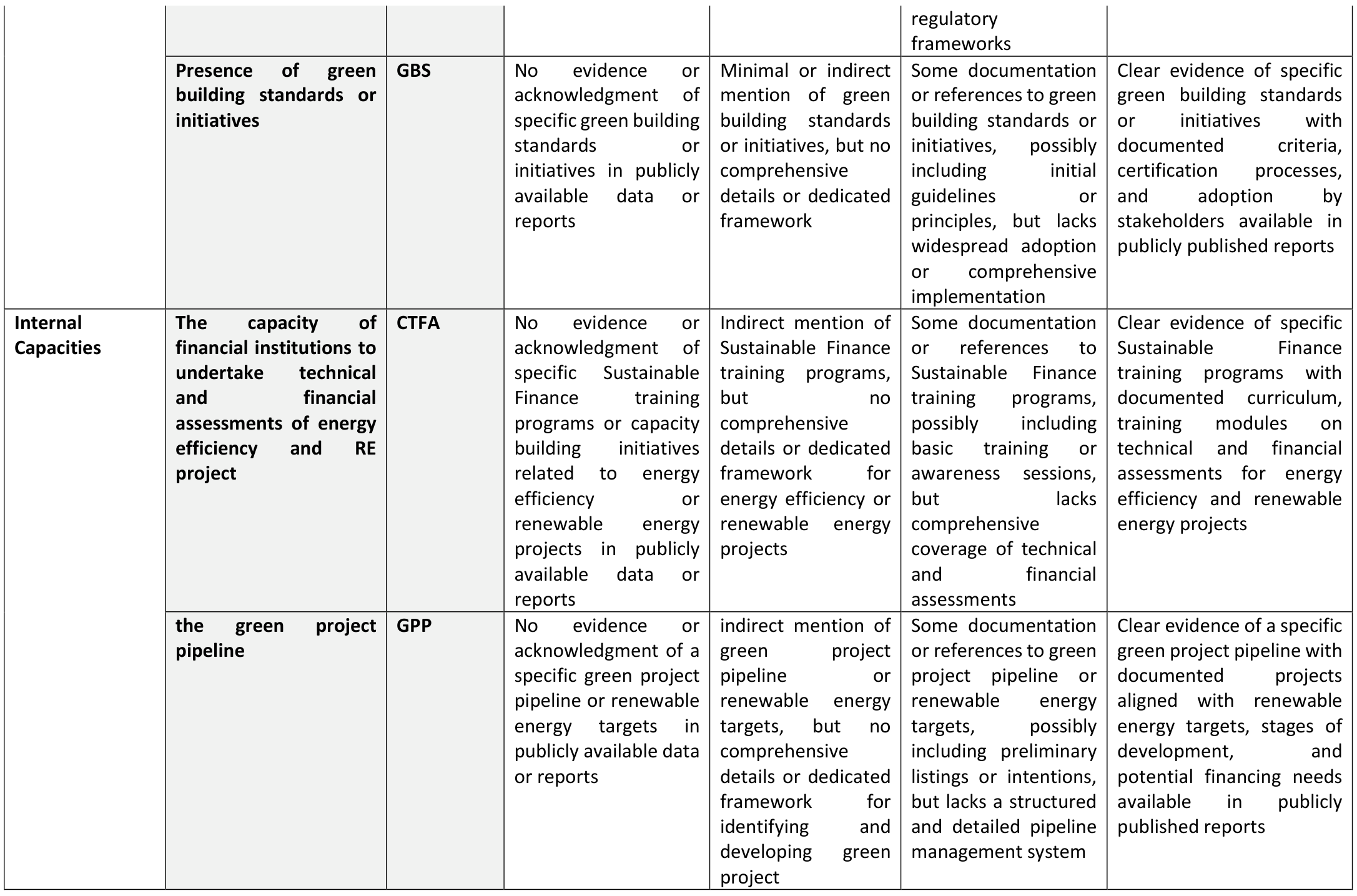
Table 5: Scale Definition for GCL Implementation Potential Index (GCIPI): Criteria and Sub-Indicators Factors Sub-indices Abbreviati on Scale definition 0 1 2 3 Financial Institution Performance Financial performance of the FIs FP6 D and SD (In default) Low: ranging from CCC+, CCC, CCC-, CC, C. Med: ranging from BBB+, BBB, BBB-, BB+, BB, BB-, B+, B, B-. High: ranging from AAA, AA+, AA, AA-, A+, A, A- Sustainable portfolio of the Fis (exposure to high-carbon sectors) SP No significant efforts to reduce exposure to high-carbon sectors Some initial efforts towards sustainability, and minor reductions in high-carbon investments Substantial commitment to sustainability, and moderate reductions in exposure to high- carbon sectors Leader in sustainability, with aggressive targets and substantial reductions in high-carbon sector exposure Governmental Frameworks National Green Finance Strategy NGFS No evidence of a National Green Finance Strategy in publicly available data or reports Indirect mention of a National Green Finance Strategy in publicly available data or reports, but no comprehensive details or dedicated strategy documents Some documentation or references to a National Green Finance Strategy, possibly including high-level goals or intentions, but lacks detailed implementation plans or strategies Clear evidence of a National Green Finance Strategy with documented goals, strategies, and initial implementation plans available in publicly published reports. Regulations and Guidelines for GCLs - Reporting RG No evidence of specific regulations or guidelines for Green Credit Lines (GCL) in publicly available data or reports Direct mention of regulations or guidelines for Green Credit Lines (GCL), but no comprehensive details or dedicated regulatory framework. Some documentation or references to regulations or guidelines for Green Credit Lines (GCL), possibly including broad principles or intentions, but lacks detailed implementation guidelines or Clear evidence of specific regulations or guidelines for Green Credit Lines (GCL), with documented criteria, eligibility requirements, and implementation guidelines available in publicly published reports.
Read figure text
regulatory frameworks Presence of green building standards or initiatives GBS No evidence or acknowledgment of specific green building standards or initiatives in publicly available data or reports Minimal or indirect mention of green building standards or initiatives, but no comprehensive details or dedicated framework Some documentation or references to green building standards or initiatives, possibly including initial guidelines or principles, but lacks widespread adoption or comprehensive implementation Clear evidence of specific green building standards or initiatives with documented criteria, certification processes, and adoption by stakeholders available in publicly published reports Internal Capacities The capacity of financial institutions to undertake technical and financial assessments of energy efficiency and RE project CTFA No evidence or acknowledgment of specific Sustainable Finance training programs or capacity building initiatives related to energy efficiency or renewable energy projects in publicly available data or reports Indirect mention of Sustainable Finance training programs, but no comprehensive details or dedicated framework for energy efficiency or renewable energy projects Some documentation or references to Sustainable Finance training programs, possibly including basic training or awareness sessions, but lacks comprehensive coverage of technical and financial assessments Clear evidence of specific Sustainable Finance training programs with documented curriculum, training modules on technical and financial assessments for energy efficiency and renewable energy projects the green project pipeline GPP No evidence or acknowledgment of a specific green project pipeline or renewable energy targets in publicly available data or reports indirect mention of green project pipeline or renewable energy targets, but no comprehensive details or dedicated framework for identifying and developing green project Some documentation or references to green project pipeline or renewable energy targets, possibly including preliminary listings or intentions, but lacks a structured and detailed pipeline management system Clear evidence of a specific green project pipeline with documented projects aligned with renewable energy targets, stages of development, and potential financing needs available in publicly published reports
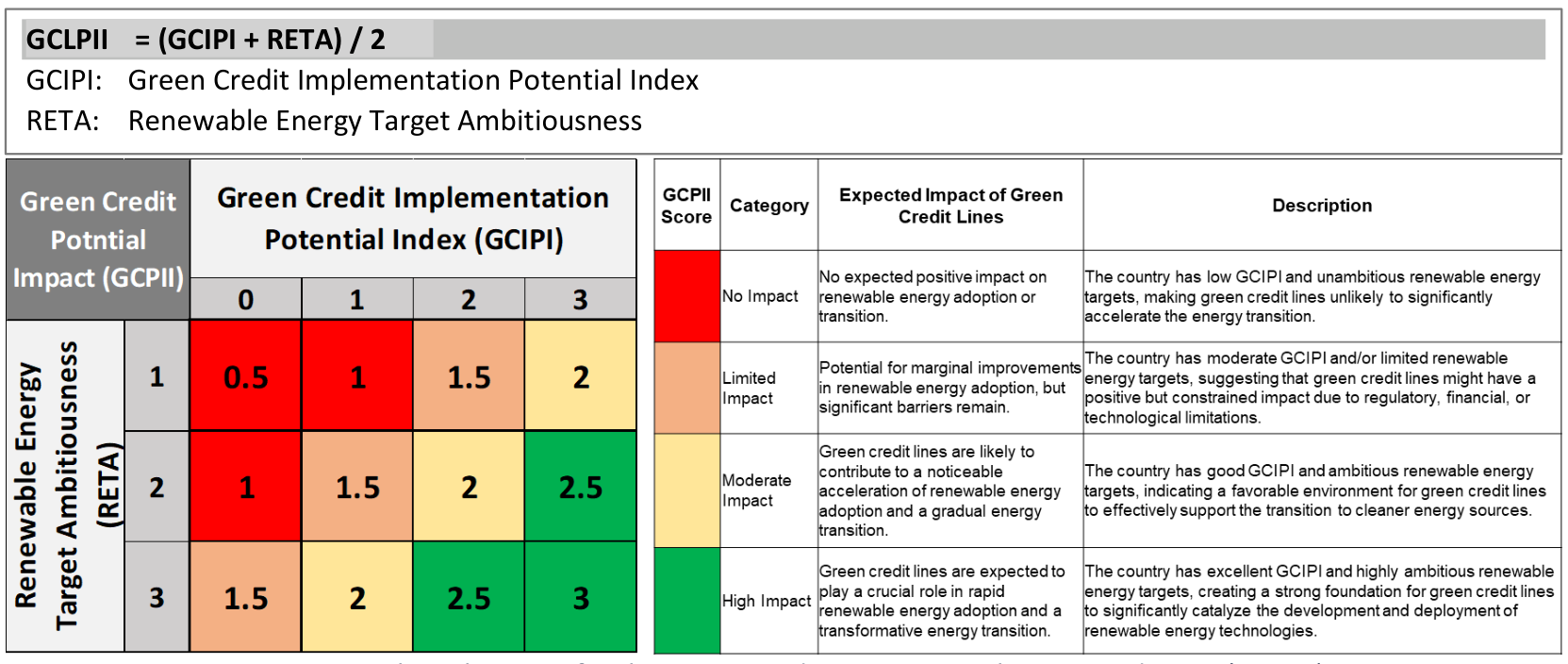
GCL Potential Impact Indicator (GCLPII) GCLPII measures the expected influence of implementing Green Credit Lines (GCL) by financial institutions (FIs) within a country on advancing energy transition goals.
As mentioned above, this indicator utilizes two factors namely; (1) the GCLIPI, and (2) the RE target ambitiousness which measures the level of ambition of a country's RE targets (see explanatory note 2). Data sources include government RE plans and international reports tracking RE targets. The RE target ambitiousness is scored based on a pre-defined scale (e.g., Highly ambitious, moderate, Ambitious with challenges) reflecting the target's level of ambition compared to current energy production. The indicator is calculated as a simple average of the GCLIPI score and the RE target ambitiousness score (after converting it to a numerical value).
Highly ambitious (3 points):
The country has a target for RE exceeding a certain percentage of total energy generation by a specific year (e.g., 50% RE by 2040). This target should also be considered ambitious compared to the region's average or the country's current energy production level with suitable timeframe.
Moderate (2 points):
The country has a RE target but it might be less ambitious than the "High" category (e.g., 30% RE by 2050). Targets with long timelines or unclear definitions might also fall into this category.
Ambitious with challenges (1 point):
The country has ambitious target for high RE use, but significant efforts are required and challenges need to be addressed.
Read figure text
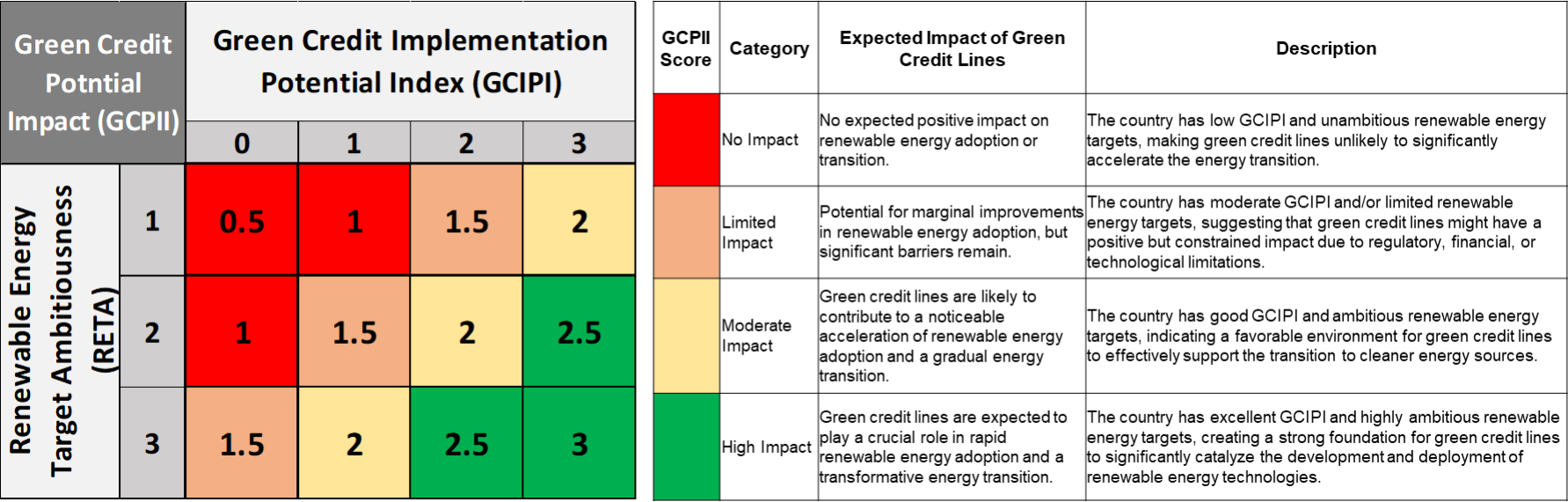
Figure 8: Benchmark matrix for the Green Credit Line Potential Impact Indicator (GCLPII) GCLPII = (GCIPI + RETA) / 2 GCIPI: Green Credit Implementation Potential Index RETA: Renewable Energy Target Ambitiousness
Read figure text
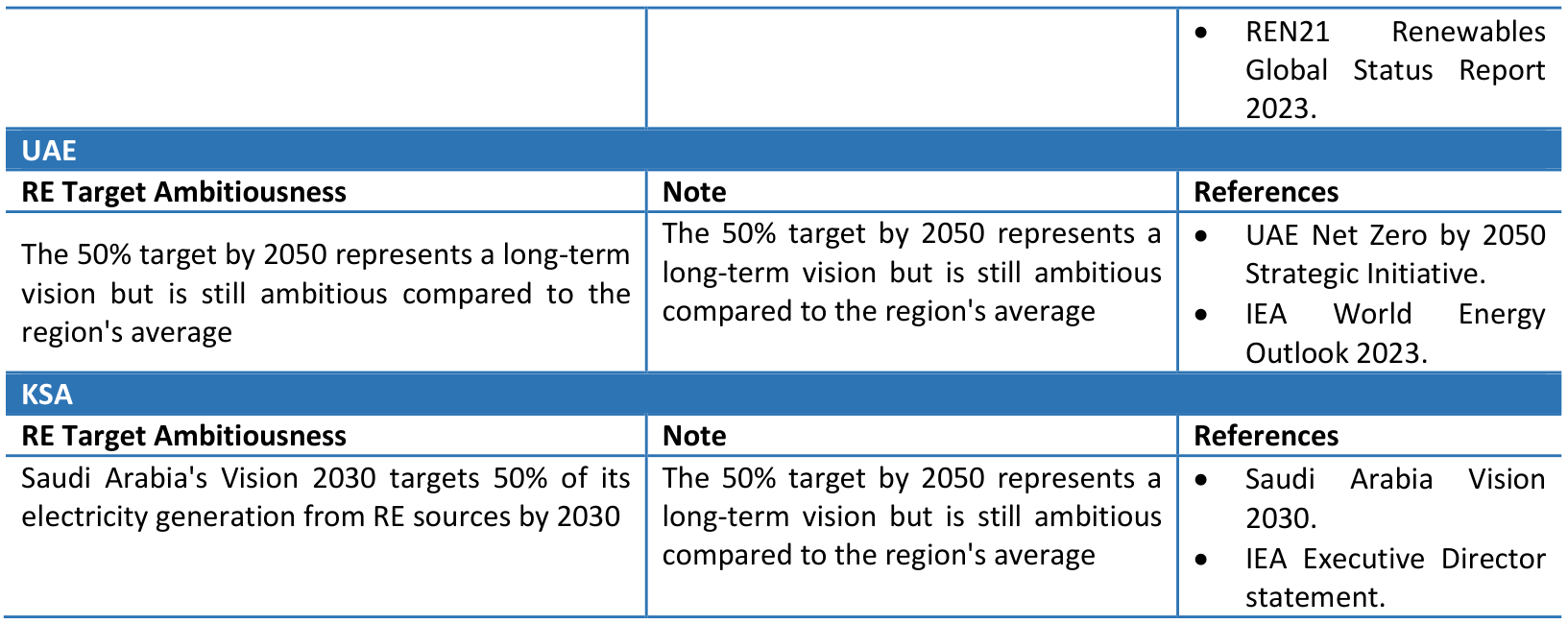
• REN21 Renewables Global Status Report 2023. UAE RE Target Ambitiousness Note References The 50% target by 2050 represents a long-term vision but is still ambitious compared to the region's average The 50% target by 2050 represents a long-term vision but is still ambitious compared to the region's average • UAE Net Zero by 2050 Strategic Initiative. • IEA World Energy Outlook 2023. KSA RE Target Ambitiousness Note References Saudi Arabia's Vision 2030 targets 50% of its electricity generation from RE sources by 2030 The 50% target by 2050 represents a long-term vision but is still ambitious compared to the region's average • Saudi Arabia Vision 2030. • IEA Executive Director statement.
Analysis and Discussion
GCL Implementation Potential Index (GCLIPI)
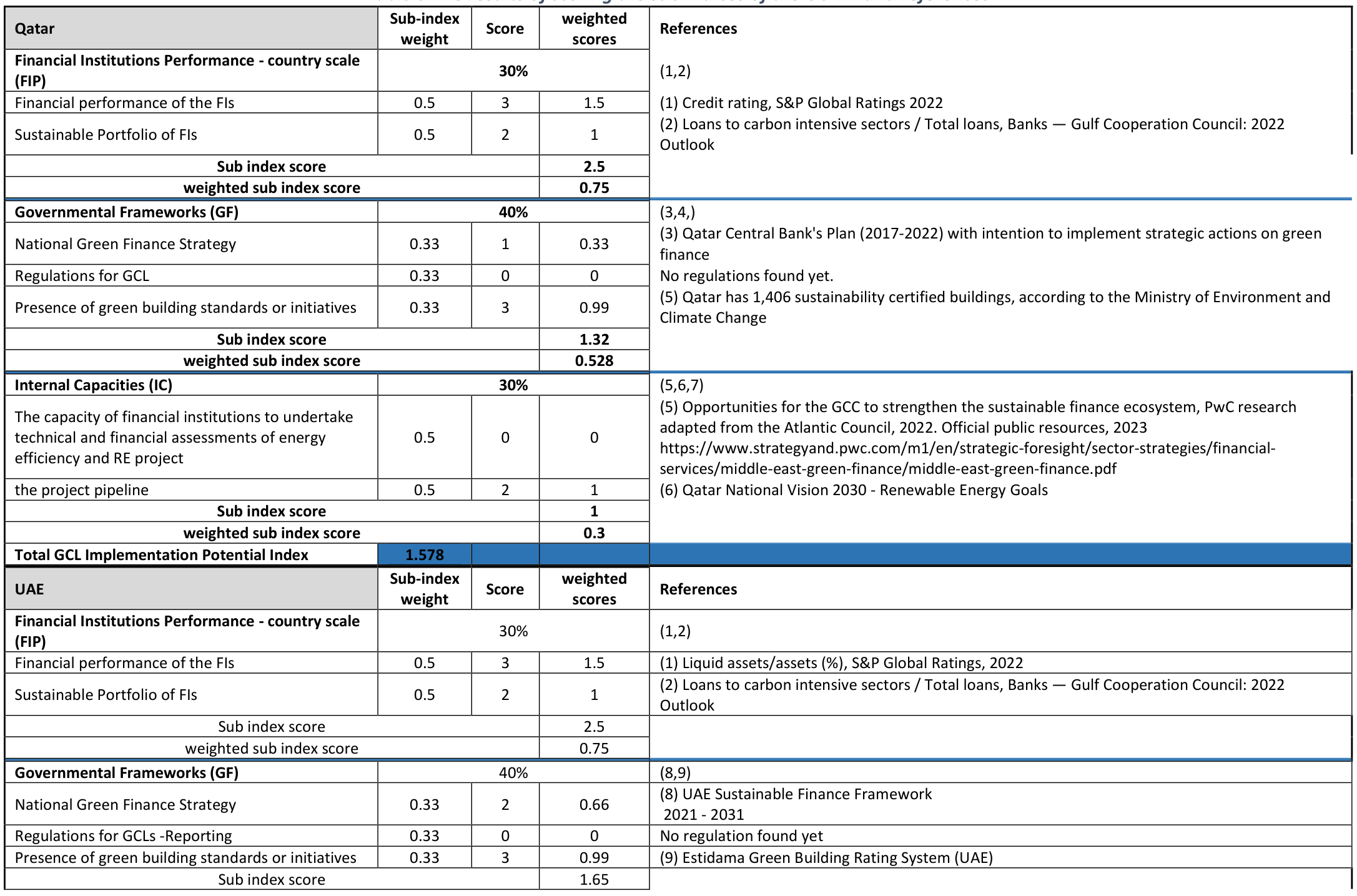
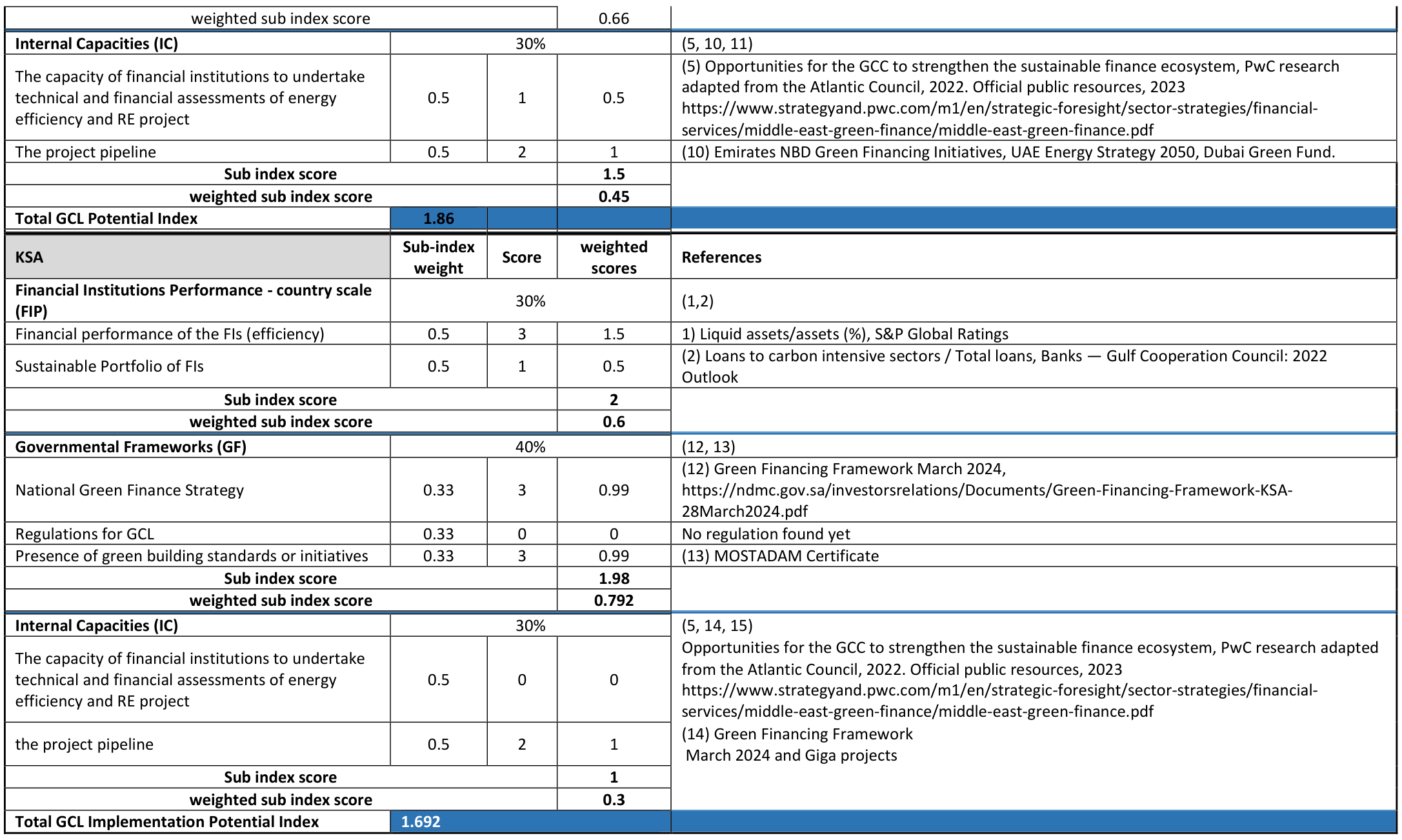
This study aimed to assess the GCL potential of Qatar compared to the UAE, and KSA by developing a GCL Implementation Potential Index. According to the first national survey on contributions of the FIs to Green Economy, the UAE appears to be the only country among the three with existing GCL within their green finance offerings. This suggests a potential head start for the UAE in terms of GCL implementation. Regarding the degree to which the financial system within the three countries is prepared to establish the GCL, which measured by the financial performance, and the sustainable portfolio of FIs, Qatar and UAE scored highest in this sub-indicator, indicating both the health of the FIs and higher commitment by the FIs to sustainability and energy transition. Regarding the governmental frameworks in the three countries, the analysis revealed that while each country has implemented supportive policies and took steps toward the green finance, the KSA demonstrated a more developed and comprehensive green Financing Framework. Qatar and the UAE could benefit from exploring similar initiatives to enhance their GCL potential. For the internal capacities (measured by the green finance expertise, green projects pipeline), while all three countries showed similar results regarding the green projects pipeline, the UAE demonstrates a documented effort regarding the sustainable finance training. Based on the factors analyzed, UAE appears to be the most prepared for GCL establishment by the FIs and deployment. The KSA shows promise with a focus on building enabling governmental frameworks. While Qatar is possessing a strong financial sector, limitations in the enabling environment criteria hinder its immediate GCL readiness.
Read figure text
Table 8:The results of scoring the sub-indices of the GCLIPI and references Qatar Sub-index weight Score weighted scores References Financial Institutions Performance - country scale (FIP) 30% (1,2) Financial performance of the FIs 0.5 3 1.5 (1) Credit rating, S&P Global Ratings 2022 Sustainable Portfolio of FIs 0.5 2 1 (2) Loans to carbon intensive sectors / Total loans, Banks — Gulf Cooperation Council: 2022 Outlook Sub index score 2.5 weighted sub index score 0.75 Governmental Frameworks (GF) 40% (3,4,) National Green Finance Strategy 0.33 1 0.33 (3) Qatar Central Bank's Plan (2017-2022) with intention to implement strategic actions on green finance Regulations for GCL 0.33 0 0 No regulations found yet. Presence of green building standards or initiatives 0.33 3 0.99 (5) Qatar has 1,406 sustainability certified buildings, according to the Ministry of Environment and Climate Change Sub index score 1.32 weighted sub index score 0.528 Internal Capacities (IC) 30% (5,6,7) The capacity of financial institutions to undertake technical and financial assessments of energy efficiency and RE project 0.5 0 0 (5) Opportunities for the GCC to strengthen the sustainable finance ecosystem, PwC research adapted from the Atlantic Council, 2022. Official public resources, 2023 https://www.strategyand.pwc.com/m1/en/strategic-foresight/sector-strategies/financial- services/middle-east-green-finance/middle-east-green-finance.pdf the project pipeline 0.5 2 1 (6) Qatar National Vision 2030 - Renewable Energy Goals Sub index score 1 weighted sub index score 0.3 Total GCL Implementation Potential Index 1.578 UAE Sub-index weight Score weighted scores References Financial Institutions Performance - country scale (FIP) 30% (1,2) Financial performance of the FIs 0.5 3 1.5 (1) Liquid assets/assets (%), S&P Global Ratings, 2022 Sustainable Portfolio of FIs 0.5 2 1 (2) Loans to carbon intensive sectors / Total loans, Banks — Gulf Cooperation Council: 2022 Outlook Sub index score 2.5 weighted sub index score 0.75 Governmental Frameworks (GF) 40% (8,9) National Green Finance Strategy 0.33 2 0.66 (8) UAE Sustainable Finance Framework 2021 - 2031 Regulations for GCLs -Reporting 0.33 0 0 No regulation found yet Presence of green building standards or initiatives 0.33 3 0.99 (9) Estidama Green Building Rating System (UAE) Sub index score 1.65
Read figure text
weighted sub index score 0.66 Internal Capacities (IC) 30% (5, 10, 11) The capacity of financial institutions to undertake technical and financial assessments of energy efficiency and RE project 0.5 1 0.5 (5) Opportunities for the GCC to strengthen the sustainable finance ecosystem, PwC research adapted from the Atlantic Council, 2022. Official public resources, 2023 https://www.strategyand.pwc.com/m1/en/strategic-foresight/sector-strategies/financial- services/middle-east-green-finance/middle-east-green-finance.pdf The project pipeline 0.5 2 1 (10) Emirates NBD Green Financing Initiatives, UAE Energy Strategy 2050, Dubai Green Fund. Sub index score 1.5 weighted sub index score 0.45 Total GCL Potential Index 1.86 KSA Sub-index weight Score weighted scores References Financial Institutions Performance - country scale (FIP) 30% (1,2) Financial performance of the FIs (efficiency) 0.5 3 1.5 1) Liquid assets/assets (%), S&P Global Ratings Sustainable Portfolio of FIs 0.5 1 0.5 (2) Loans to carbon intensive sectors / Total loans, Banks — Gulf Cooperation Council: 2022 Outlook Sub index score 2 weighted sub index score 0.6 Governmental Frameworks (GF) 40% (12, 13) National Green Finance Strategy 0.33 3 0.99 (12) Green Financing Framework March 2024, https://ndmc.gov.sa/investorsrelations/Documents/Green-Financing-Framework-KSA- 28March2024.pdf Regulations for GCL 0.33 0 0 No regulation found yet Presence of green building standards or initiatives 0.33 3 0.99 (13) MOSTADAM Certificate Sub index score 1.98 weighted sub index score 0.792 Internal Capacities (IC) 30% (5, 14, 15) The capacity of financial institutions to undertake technical and financial assessments of energy efficiency and RE project 0.5 0 0 Opportunities for the GCC to strengthen the sustainable finance ecosystem, PwC research adapted from the Atlantic Council, 2022. Official public resources, 2023 https://www.strategyand.pwc.com/m1/en/strategic-foresight/sector-strategies/financial- services/middle-east-green-finance/middle-east-green-finance.pdf the project pipeline 0.5 2 1 (14) Green Financing Framework March 2024 and Giga projects Sub index score 1 weighted sub index score 0.3 Total GCL Implementation Potential Index 1.692
GCL Potential Impact Indicator (GCLPII)
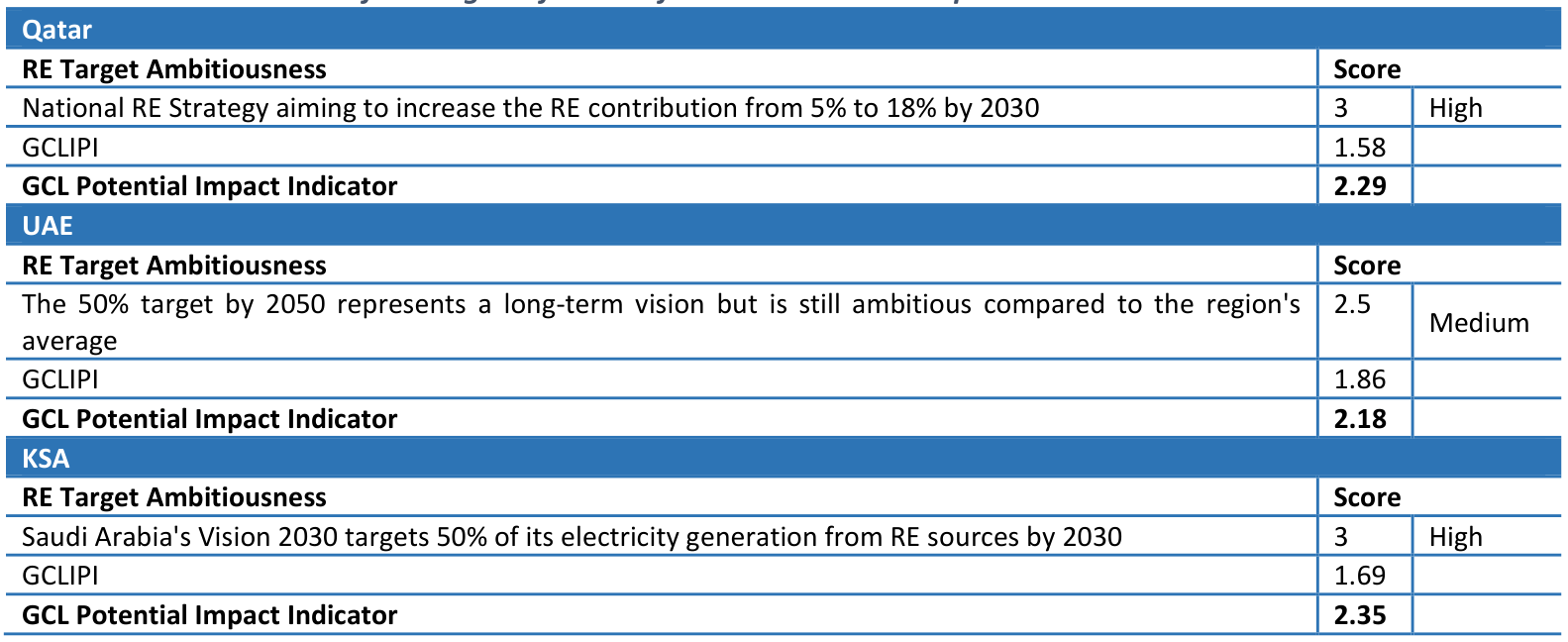
The RE target ambitiousness is assessed through reviewing the RE target for the three countries within the specified timeframe (Table 7). Qatar's RE target stands out as highly ambitious, aiming for a significant increase in the share of RE in the power mix by 2030 (from 5% to 18%) as documented in Qatar National RE strategy [37]. By facilitating access to financing for green projects, GCLs can play a crucial role in enabling Qatar to achieve its ambitious RE targets. Many studies demonstrate how GCLs can accelerate clean energy development by providing tailored financing solutions for RE projects [38].
For KSA, the RE target highlights ambitious within the specified timeframe, however, there are many challenges the kingdom might encounter and thus the transition requires more effort. The result reveals that KSA may witness high impact from establishing the GCL by the FIs given its GCL potential and RE target. Hence, the GCL potential impact indicator is the highest for the KSA given the challenging target of RE, the GCL might act as catalyzer for enabling such transition.
To sum up, the study compared the GCL potential of Qatar, the UAE, and KSA. While the UAE has existingly limited GCL products, KSA possesses the strongest readiness of financial sector. All three countries share similar green projects pipelines and ambitious RE targets, with Qatar having a particularly new set high target. Analyzing GCL potential alongside RE target ambition, the study suggests KSA has the highest GCL potential impact on energy transition. Qatar also shows promise due to its RE target, while the UAE's more moderate RE target leads to a relatively lower impact of GCLs. Overall, GCLs hold promise for the GCC, but each country needs to address its limitations to unlock full potential of GCLs.
As shown in the above table, the three countries have good GCIPI and ambitious renewable energy targets, indicating a favorable environment for green credit lines to effectively support the transition to cleaner energy sources.
Read figure text
Table 9: The results of Scoring the factors of the GCL Potential Impact Indicator Qatar RE Target Ambitiousness Score National RE Strategy aiming to increase the RE contribution from 5% to 18% by 2030 3 High GCLIPI 1.58 GCL Potential Impact Indicator 2.29 UAE RE Target Ambitiousness Score The 50% target by 2050 represents a long-term vision but is still ambitious compared to the region's average 2.5 Medium GCLIPI 1.86 GCL Potential Impact Indicator 2.18 KSA RE Target Ambitiousness Score Saudi Arabia's Vision 2030 targets 50% of its electricity generation from RE sources by 2030 3 High GCLIPI 1.69 GCL Potential Impact Indicator 2.35
Conclusion
This study adopted a qualitative conceptual framework to assess the GCLs potential in Qatar and the wider GCC region. It begins with a literature review that defined and explored the enablers, opportunities, and challenges associated with the potential and impact of GCLs. Building upon this foundation, the study presented a methodology to assess both the GCL establishment potential and the impact on achieving Qatar's energy transition goals compared with two GCC countries, namely, the UAE and KSA. This methodology involved examining publicly published and historical data to evaluate the progress of GCL establishment and sustainable finance frameworks.
To comprehensively measure GCL potential and impact, the study utilizes two metrics: the GCL Implementation Potential Index and the GCL Potential Impact Indicator. The study identified the GCL potential across all three Gulf nations. While Qatar possesses a strong financial sector, limitations in its governmental frameworks hinder its immediate GCL readiness. However, Qatar's highly ambitious RE target, aiming for a significant increase in the share of RE in the power mix, necessitates innovative financing solutions like GCLs. UAE emerged as the country with the strongest overall GCL potential based on the GCL Implementation Potential Index. This suggests a head start for the UAE in terms of practical GCL experience. This is attributed to its robust financial sector and the existence of current GCL products. The KSA demonstrated a more developed and comprehensive green Financing Framework. All three countries share ambitious RE targets and similar green projects pipelines, highlighting a strong commitment to clean energy development.
Policy Recommendations
This study emphasizes the need for Qatar to prioritize the development of a comprehensive green financing and investment framework. Such a framework can address the limitations identified by the GCL Implementation Potential Index within the country's enabling environment. A well-designed framework should aim to enhance the competitiveness of green investments compared to traditional brown alternatives [39]. The main objective is to reduces perceived high risks associated with the energy transition projects from the investor point of view. This will increase the investor base for this type of projects which, in turn, will have a positive effect on the green projects pipeline. Furthermore, sufficient financial regulations will address the uncertainty and risk aversion among potential investors.
In addition to the overall finance and investment framework, Qatar can introduce policies that incentivize or require potential borrowers to participate in training programs on green project development and financing. These programs, potentially co-developed with the Qatari Central Bank and FIs, should equip borrowers with the necessary skills to develop technically sound and bankable green projects. This also will accelerate the increase in the investor base and green projects pipeline.
Financial Sector Recommendations
Qatar and GCC region in general need to focus on capacity building within the banking sector, the FIs should prioritize building capacity within through targeted training programs. These programs should focus on equipping the finance-oriented team (bank staff) with the necessary expertise to assess green projects. Training should cover the technical, economic & financial, and socio-environmental attributes of the green loan and the underlying project. Bank staff must be proficient in technical terminologies such as energy efficiency measures, greenhouse gas emissions, CO2 savings, efficiency factors, and baseline energy sources. A deep understanding of these concepts will aid in client acquisition, product promotion, and effectively communicating the benefits of GCL. Additionally, to enhance the promotion of green loans and their benefits to the borrows (investors), bank officers should possess both theoretical and practical knowledge of common green measures, including energy efficiency and RE solutions enabling them to confidently discuss these topics during introductory or basic conversations with potential clients.
By addressing the identified limitations and implementing the recommended actions, Qatar can unlock the full potential of GCLs and significantly accelerate its transition towards a sustainable economy. GCLs can play a pivotal role in mobilizing financial resources towards RE projects, contributing meaningfully to achieving Qatar's ambitious climate change mitigation goals. Further research exploring the specific details of potential GCL programs and tracking the effectiveness of GCLs in promoting green investments would provide valuable insights for ongoing development and refinement of GCL implementation strategies in Qatar. Moreover, adopting clear taxonomies such as the GLP will help in differentiating between green and brown projects, ensuring the credibility and effectiveness of green credit lines. By realizing these recommendations, Qatar can bridge the gap with its competitors and leverage GCLs to achieve its ambitious clean energy goals.
Study Limitations
This study acknowledges several limitations that require further consideration. The quality and accessibility of publicly available data vary significantly across Gulf countries, affecting the accuracy of the GCL implementation Potential Index and GCL Potential Impact Indicator. Additionally, the GCL Potential Index and Impact Indicators, while useful for comparative analysis, could benefit from further refinement by integrating more data sources and expert insights. Incorporating specific features and eligibility criteria of existing GCL products and obtaining qualitative insights from green finance specialists would strengthen the assessment. Addressing these limitations through stakeholder engagement and additional data sources in the UAE and KSA would provide a more detailed understanding of the potential role of GCLs in promoting a sustainable Gulf economy.
Notes
- Qatar's baseline scenario is a projection of future GHG emissions assuming no additional mitigation measures are implemented beyond those already planned before the NDC submission. The 25% reduction target is measured against this projected emissions trajectory.
- The ND-GAIN Country Indicator summarizes a country’s vulnerability (1) to climate change and other global challenges in combination with its readiness (2) to improve resilience.
- A green lending market refers to the financial ecosystem specifically targeting environmentally sustainable projects, which includes products and services like green loans or bonds. It aims to channel funds into renewable energy, energy efficiency, and other green initiatives. By offering GCLs, local financial institutions can develop expertise in green financing and expand the market for environmental projects by providing specialized financial products ((World Bank, 2020).
- Namely, Egyptian Pollution Abatement Project II, IFC’s Commercializing Sustainable Energy Finance Program (CSEF) in Turkey – Credit Line for Leasing to three Turkish Leasing Companies, EBRD Green Economy Finance Facility Serbia - Green Credit Line to, UniCredit Bank Serbia.
- According to the OECD, a clear national strategy for green finance is critical for mobilizing investments and ensuring that financial markets support sustainable development goals. The International Monetary Fund (IMF) emphasizes the importance of regulatory frameworks in ensuring financial stability and transparency, which are crucial for the success of financial instruments like GCLs (IMF, 2023). The World Bank highlights that the adoption of green building standards is a key indicator of a country’s commitment to sustainable development and can drive significant environmental benefits (World Bank, 2023).
- According to the S&P Global credit rating scale.
- UAE Green Agenda 2015-2030 State of Green Finance in the UAE The first national survey on contributions of financial institutions to Green Economy While the UAE demonstrates strong green finance initiatives, the relatively longer timeframe for RE targets reduces the potential impact of GCLs in accelerating the transition.
References
[1] Organization for Economic Co-operation and Development (OECD). OECD Work on Green Finance and Investment. OECD Environment Directorate, 2022. https://www.oecd.org/cgfi/about/OECD-work-on-green-finance-and-investment.pdf.
[2] Battiston, Stefano, Irene Monasterolo, Keywan Riahi, and Bas J. van Ruijven. "Accounting for Finance is Key for Climate Mitigation Pathways." Science 372, no. 6545 (2021): 918-920.
[3] Corfee-Morlot, Jan, Valérie Marchal, Céline Kauffmann, Christopher Kennedy, Fiona Stewart, Christopher Kaminker, and Graeme Ang. Towards a Green Investment Policy Framework: The Case of Low-Carbon, Climate-Resilient Infrastructure. 2012.
[4] World Bank. 2020.
[5] Engineering Net Zero, Gulf Cooperation Council Report. 2022.
[6] Al-Sarihi, Aisha. Climate Action in the GCC: Current Status and Future Prospects. 2021.
[7] Al-Noaimi, Fatima, Tareq Al-Ansari, and Yusuf Bicer. "Toward a Long-Term Low Emission Development Strategy: The Case of Energy Transition in Qatar." Global Challenges 7, no. 3 (2023): 2200229.
[8] International Energy Agency (IEA). 2021. Energy Policies of IEA Countries: GCC Report 2021. Paris: International Energy Agency.
[9] World Bank. 2021. World Development Report 2021: Data for Better Lives. Washington, DC: World Bank
[10] Almulla, Yousef, and Mark Howells. Gulf Cooperation Council (GCC) Countries 2040 Energy Scenario for Electricity Generation and Water Desalination. Master of Science Thesis, KTH Industrial and Engineering Management, 2014.
[11] World Bank, Air Conditioning and Energy Demand in Hot Climates.
[12] European Commission, Energy Efficiency in Buildings.
[13] Passivhaus Institute, Passivhaus Standard.
[14] International Energy Agency (IEA), Energy Efficiency 2021 and Lawrence Berkeley National Laboratory (LBNL), The Future of Air Conditioning for Buildings.
[15] Sakhrieh, Ahmad. "Energy Analysis for GCC Countries." In Global Conference on Renewables and Energy Efficiency for Desert Regions, 1-4. 2016.
[16] Wogan, David, Shonali Pradhan, and Salman Albardi. GCC Energy System Overview –2017. Riyadh: King Abdullah Petroleum Studies and Research Center, 2017.
[17] General Electric. (n.d.). Pathways to faster decarbonization in the GCC’s power sector: Accelerating the energy transition with a combination of renewables and gas power. General Electric.
[18] International Monetary Fund. Gulf Cooperation Council Economic Prospects and Policy Priorities for the GCC Countries. 2023.
[19] International Monetary Fund. Gulf Cooperation Council Economic Prospects and Policy Priorities for the GCC Countries. 2023.
[20] The GCC and the Road to Net Zero. Middle East Institute. https://mei.edu.
[21] University of Notre Dame. 2023.
[22] UNEP Finance Initiative (2015), The Principles for Positive Impact Finance: A Common Framework to Finance - The Sustainable Development Goals. http://www.unepfi.org/positive-impact/principles-for-positive-impact-finance/
[23] GFANZ, (2021), The Glasgow Financial Alliance for Net Zero.
[24] International Energy Agency (IEA). (2021). World Energy Investment 2021. International Energy Agency. https://www.iea.org/reports/world-energy-investment-202.
[25] United Nations Environment Program (UNEP). (2022). Global Trends in Renewable Energy Investment 2022. UNEP. https://www.unep.org/resources/report/global-trends-renewable-energy-investment-2022.
[26] World Bank. (2020). Financing Climate Action: Green Finance and the Role of Public Policy. World Bank Group. https://www.worldbank.org/en/topic/green-finance.
[27] Shishlov, Igor, Tina Bajohr, Mariia Deheza, and Ian Cochran. Using Credit Lines to Foster Green Lending: Opportunities and Challenges. Paris: Institute for Climate Economics, 2017.
[28] Organization for Economic Co-operation and Development (OECD). (2020). Green Financing: Challenges and Opportunities in Emerging Markets. OECD.
[29] Smith, J., et al. (2020). "Unlocking the potential of Green Credit Lines: Lessons from emerging markets." Journal of Sustainable Finance & Investment, 10(3), 257-273
[30] Loan Market Association (LMA). (2021). Green Loan Principles. Available at: LMA Green Loan Principles.
[31] Climate Bonds Initiative. (2020). Green Bond Principles and Standards. Available at: Climate Bonds Initiative.
[32] European Commission. (2020). EU Taxonomy for Sustainable Activities.
[33] International Capital Market Association (ICMA). (2021). Green Bond Principles.
[34] Aravamuthan, Vijay, Miguel Ruete, and Andres Dominguez. "Enhancing Private Sector Investment in Green Growth and Climate Change Resilience." Inter-American Development Bank, 2015.
[35] Organization for Economic Co-operation and Development. "Climate Finance in 2013-2014 and the USD 100 Billion Goal: A Report by the OECD in Collaboration with Climate Policy Initiative." OECD, 2016.
[36] Enclude Limited. "Enhancing Private Sector Investment in Green Growth and Climate Change Resilience." Enclude, 2016.
[37] Qatar National Renewable Energy Strategy. May 2024.
[38] Brown, Jessica, and Michael Jacobs. "Leveraging Private Investment: The Role of Public Sector Climate Finance." Overseas Development Institute, 2011.
[39] World Bank. "Climate Investment Funds.". https://fiftrustee.worldbank.org/en/about/unit/dfi/fiftrustee/funds.
Related Content
Sudan's Energy Balance 2020
Sudan’s energy balance for the year 2020 had shown lower figures from previous years trends, while maintaining largely the same proportions of energy supply resources,
Read Article →Scope 4 Emissions: The Concept of Avoided Emissions
In the global effort to combat climate change, the focus has traditionally been on reducing greenhouse gas (GHG) emissions from corporate operations and value chains.
Read Article →The Imperative for ESG Readiness Tools: Unlocking Benefits for Companies, Institutions, and Society
Environmental, Social, and Governance (ESG) considerations have evolved from being a corporate trend to becoming essential criteria for sustainable and ethical growth.
Read Article →