

The Origins of Urban Greening
The Origins of Urban Greening
Read the original archive edition (PDF)
Introduction
Urban greening, as a modern concept, is often traced back to the development of public parks in the 19th century. Notable early examples include New York City's Central Park, designed by Frederick Law Olmsted and Calvert Vaux in the 1850s, which aimed to provide green space for city dwellers amidst the rapid industrialization of the time. In Europe, similar ideas emerged in cities like London and Paris, where city planners sought to balanc e urban development with green spaces. Today, urban greening is recognized as a global priority, with cities worldwide working to integrate nature into their infrastructure.
Sustainable Urban Greening: Leveraging Existing Infrastructure
Integrating urban greening with existing infrastructure allows cities to enhance their sustainability without requiring extensive land or resources. Key strategies include:
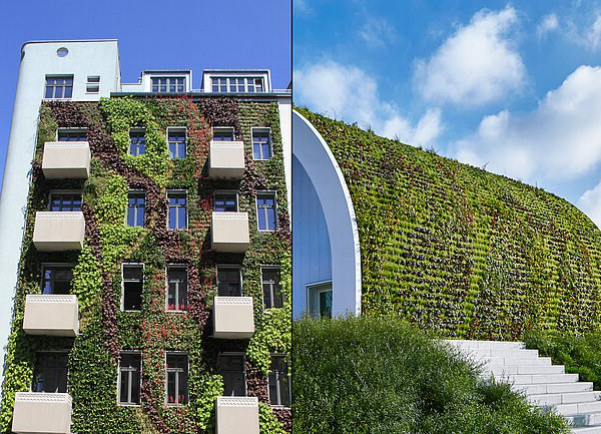
Green Roofs and Walls: Installing vegetation on the roofs and walls of buildings can significantly reduce heat in cities, improve air quality, and add aesthetic appeal. Cities like Toronto and Singapore have implemented green roof policies to encourage such installations.
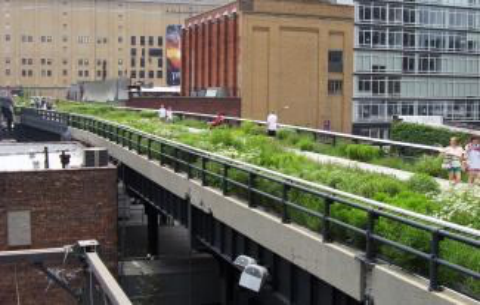
Repurposing Abandoned Spaces: Old industrial sites and vacant lots can be converted into parks or community gardens. For instance, New York's High Line, a former railway line, is now a renowned elevated greenway that combines recreation with biodiversity.
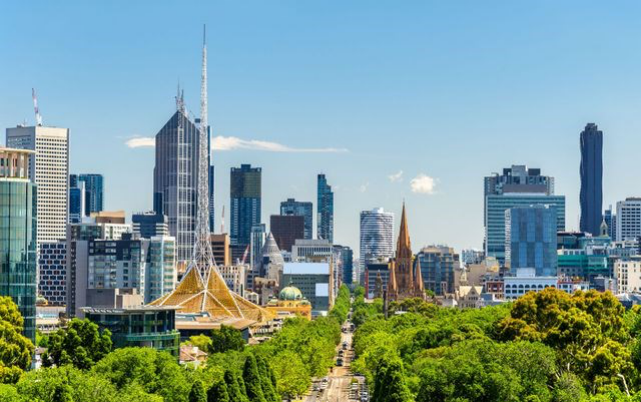
Street Tree Planting and Green Corridors:
Planting trees along roads and creating green corridors encourages biodiversity and reduces pollution. Melbourne, Australia, has planted thousands of trees and established "urban forests" that contribute to improved air quality and reduced heat.
Successful Examples of Urban Greening
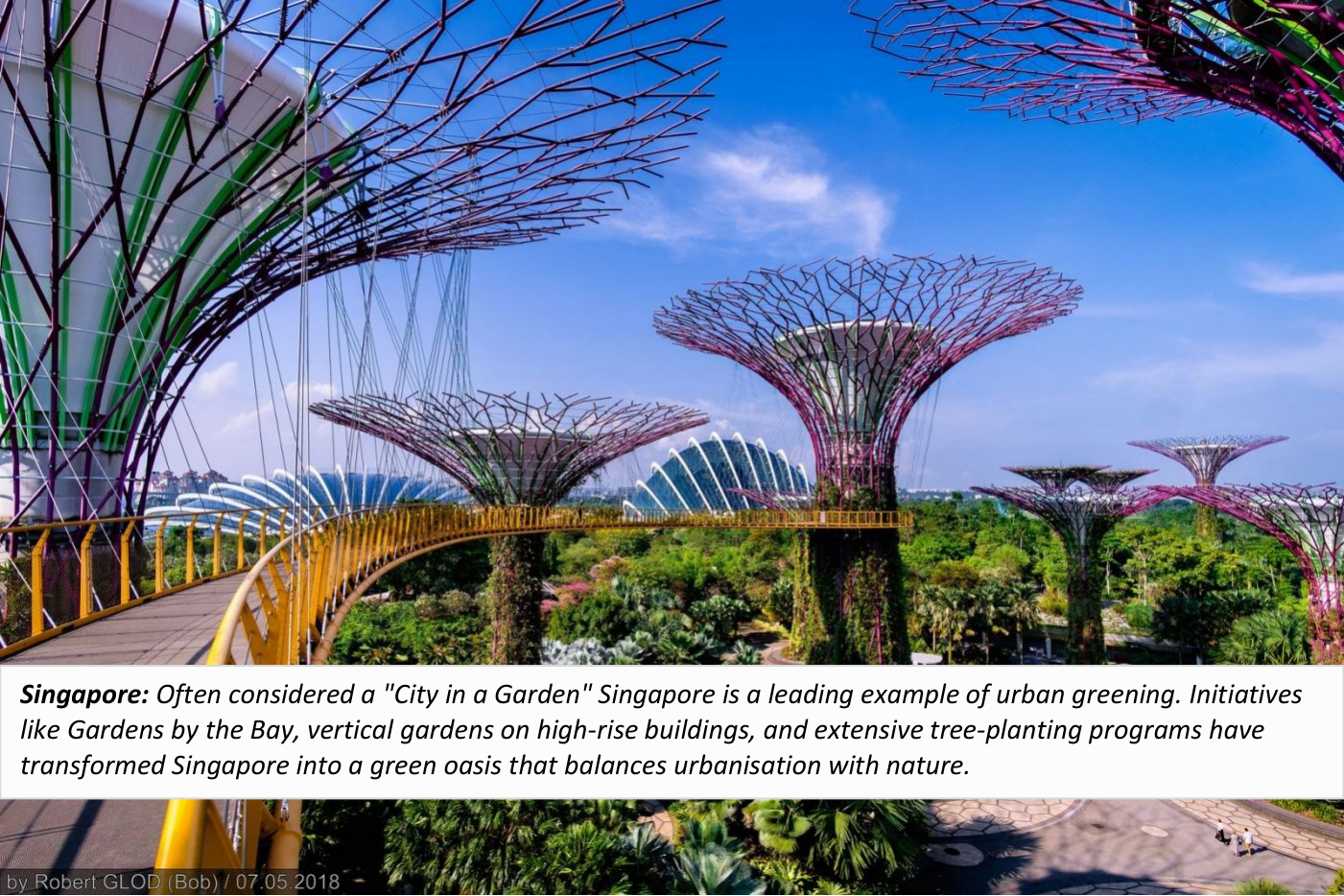
Singapore: Often considered a "City in a Garden" Singapore is a leading example of urban greening. Initiatives like Gardens by the Bay, vertical gardens on high-rise buildings, and extensive tree-planting programs have transformed Singapore into a green oasis that balances urbanisation with nature.
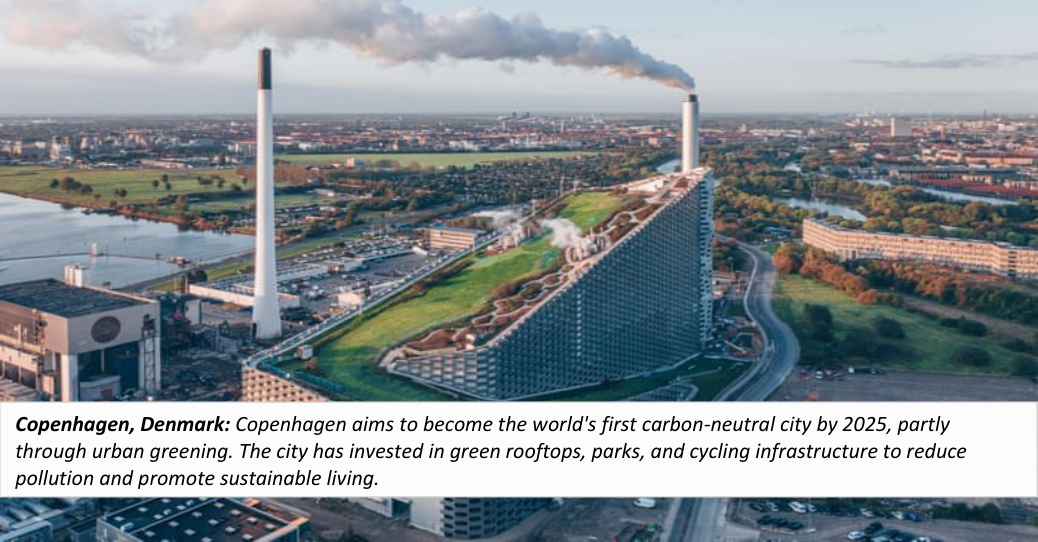
Copenhagen, Denmark: Copenhagen aims to become the world's first carbon-neutral city by 2025, partly through urban greening. The city has invested in green rooftops, parks, and cycling infrastructure to reduce pollution and promote sustainable living.
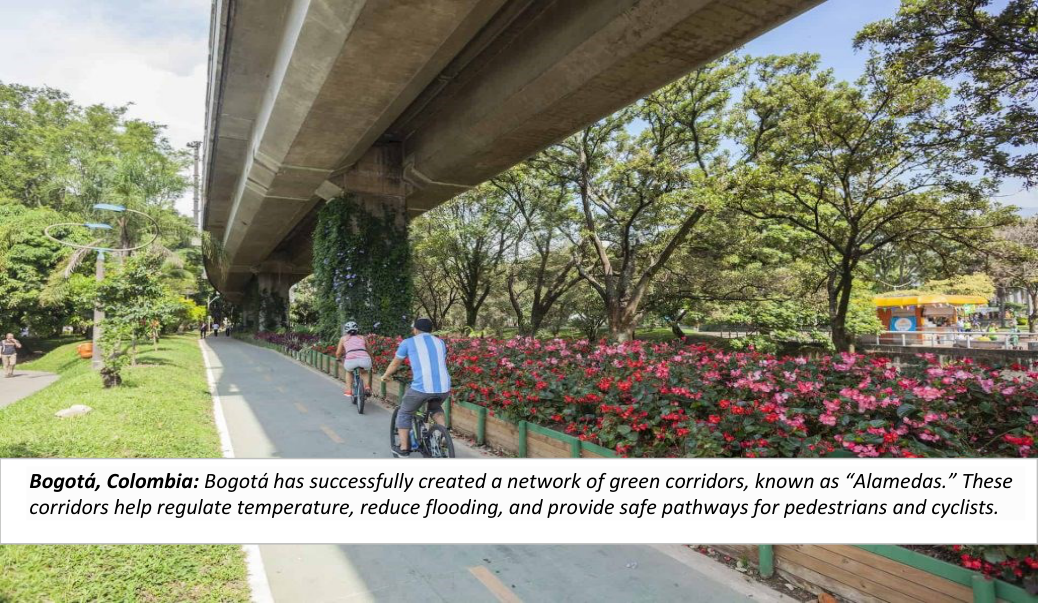
Bogotá, Colombia: Bogotá has successfully created a network of green corridors, known as “Alamedas.” These corridors help regulate temperature, reduce flooding, and provide safe pathways for pedestrians and cyclists.
Advantages
Urban greening offers a multitude of benefits for both the environment and human well-being. Environmentally, it plays a crucial role in mitigating climate change by absorbing carbon dioxide and reducing air pollution. For instance, a study by the Environmental Protection Agency (EPA) found that trees can remove up to 60 pounds of air pollutants per year. Additionally, green spaces help to combat the urban heat island effect, cooling cities and reducing energy consumption.
From a health perspective, access to green spaces has been linked to numerous positive outcomes. Research by the World Health Organisation (WHO) suggests that spending time in nature can reduce stress, improve mental health, and lower the risk of chronic diseases. Furthermore, green spaces encourage physical activity, as they provide opportunities for walking, jogging, and cycling.
Economically, urban greening can contribute to a city's vitality. Studies have shown that green spaces can increase property values and attract businesses and tourists. For example, the High Line in New York City, a former elevated railway transformed into a public park, has revitalised the surrounding neighbourhoods and generated significant economic benefits.
Finally, green spaces foster social cohesion by providing places for people to gather, relax, and interact. Community gardens, parks, and urban forests can create a sense of belonging and strengthen social bonds.
Disadvantages
While urban greening has numerous advantages, it also presents certain challenges. Initial costs can be substantial, particularly for large-scale projects that require significant infrastructure investments. Moreover, ongoing maintenance is essential to ensure the health and vitality of green spaces. This includes tasks such as watering, pruning, and removing litter, which can be resource intensive.
In some cases, urban greening projects may inadvertently contribute to gentrification. As property values rise in areas with new green spaces, long-time residents may be displaced due to increased housing costs. This is a complex issue that requires careful planning and consideration of social equity.
In regions with limited water resources, water usage for urban greening can be a concern. However, innovative water management strategies, such as rainwater harvesting and drought-tolerant plant selection, can help to mitigate this challenge.
Implementing Urban Greening in the GCC
The Gulf Cooperation Council (GCC) countries, characterised by their arid climates and rapid urbanisation, face unique challenges in implementing urban greening. However, innovative strategies are appearing to address these challenges and create sustainable, liveable cities.
One such strategy is xeriscaping, which involves landscaping with native plants that require minimal water. These drought-tolerant plants, such as desert grasses and succulents, can thrive in the harsh GCC climate. By incorporating xeriscaping into urban design, GCC cities can reduce water consumption and create visually appealing, low-maintenance landscapes.
Another promising approach is the integration of green roofs and walls into urban architecture. Cities like Dubai and Abu Dhabi have already embraced this concept, using drought-resistant vegetation to cover building rooftops and facades. Green roofs and walls offer many benefits, including reducing energy consumption, mitigating the urban heat island effect, and improving air quality.
In addition to these strategies, GCC countries are investing in large-scale urban cooling projects to combat extreme heat. Qatar's national cooling strategy, for example, aims to create a more comfortable outdoor environment through a combination of technological solutions and urban planning initiatives. Saudi Arabia's ambitious NEOM project also incorporates green infrastructure, such as green corridors and urban forests, to mitigate the impact of heat and create a sustainable, liveable city.
By adopting these innovative approaches, GCC countries can transform their urban landscapes, improve the quality of life for their residents, and contribute to a more sustainable future.
Expo 2023 Doha: A Green Oasis in the Desert
Expo 2023 Doha, themed "Green Desert, Better Environment," offers a compelling example of urban greening in an extreme climate. This international exposition displays innovative solutions for creating sustainable and livable cities in arid regions.
By focusing on sustainable technologies, such as hydroponics and solar power, the expo how to expand green spaces in desert environments. This approach not only enhances the aesthetic appeal of urban areas but also contributes to improved air quality, reduced heat island effects, and increased biodiversity.
Moreover, Expo 2023 Doha emphasises community engagement, encouraging public participation in green initiatives. By fostering a sense of ownership and responsibility, the expo aims to inspire long-lasting positive impacts on urban sustainability.
As a global platform, Expo 2023 Doha serves as a beacon of hope, showing that even in the harshest conditions, it is possible to create thriving green cities. By sharing knowledge and best practices, the expo contributes to the global effort to address climate change and build a more sustainable future.
References
Urban Greening Success Stories
- National Parks Board, Singapore. (n.d.). Garden City. [Website: National Parks Board Singapore]
- Comune di Milano. (n.d.). Urban Forestry Plan. [Website: Comune di Milano]
- Friends of the High Line. (n.d.). High Line. [Website: Friends of the High Line]
- City of Vancouver. (n.d.). Greenest City 2020 Action Plan. [Website: City of Vancouver] Urban Greening in the GCC
- Expo 2023 Doha. (2023). Green Desert, Better Environment. Retrieved from https://www.dohaexpo2023.gov.qa/
- QNA. (2023, September 29). Expo 2023 Doha: Qatar’s cutting-edge initiative to elevate greening, battle climate change - report. Retrieved from https://www.qna.org.qa/en/News-Area/News/2023-09/29/0009-expo-2023-doha-qatars-cutting-edge-initiative-to-elevate-greening,-battle-climate-change--report Urban Greening in Saudi Arabia
- Saudi Green Initiative
- NEOM: https://www.neom.com/en-us
- The Line: https://www.neom.com/en-us/regions/theline
Related Content
Sudan's Energy Balance 2020
Sudan’s energy balance for the year 2020 had shown lower figures from previous years trends, while maintaining largely the same proportions of energy supply resources,
Read Article →Scope 4 Emissions: The Concept of Avoided Emissions
In the global effort to combat climate change, the focus has traditionally been on reducing greenhouse gas (GHG) emissions from corporate operations and value chains.
Read Article →The Imperative for ESG Readiness Tools: Unlocking Benefits for Companies, Institutions, and Society
Environmental, Social, and Governance (ESG) considerations have evolved from being a corporate trend to becoming essential criteria for sustainable and ethical growth.
Read Article →