

Sustainable Tourism
Sustainable Tourism
Read the original archive edition (PDF)
Introduction
Tourism is a powerful driver of economic growth and cultural exchange, offering people the chance to explore new places and immerse themselves in different cultures. However, unregulated tourism can harm the environment, disrupt local communities, and undermine the destinations it seeks to celebrate. Sustainable tourism addresses these challenges by promoting practices that minimize negative impacts while maximizing benefits for all stakeholders involved (UNWTO, 2023). This guide explores the principles of sustainable tourism and its importance in ensuring that destinations are preserved for future generations.

What is Sustainable Tourism?
Sustainable tourism involves responsible travel practices that prioritize environmental conservation, cultural preservation, and economic stability (UNEP & WTO, 2005). It ensures that tourism activities contribute positively to the destinations visited, fostering long-term benefits for local communities and ecosystems. Essentially, sustainable tourism is about making conscious choices to protect and respect the places and people encountered during travel.
The Three Pillars of Sustainable Tourism
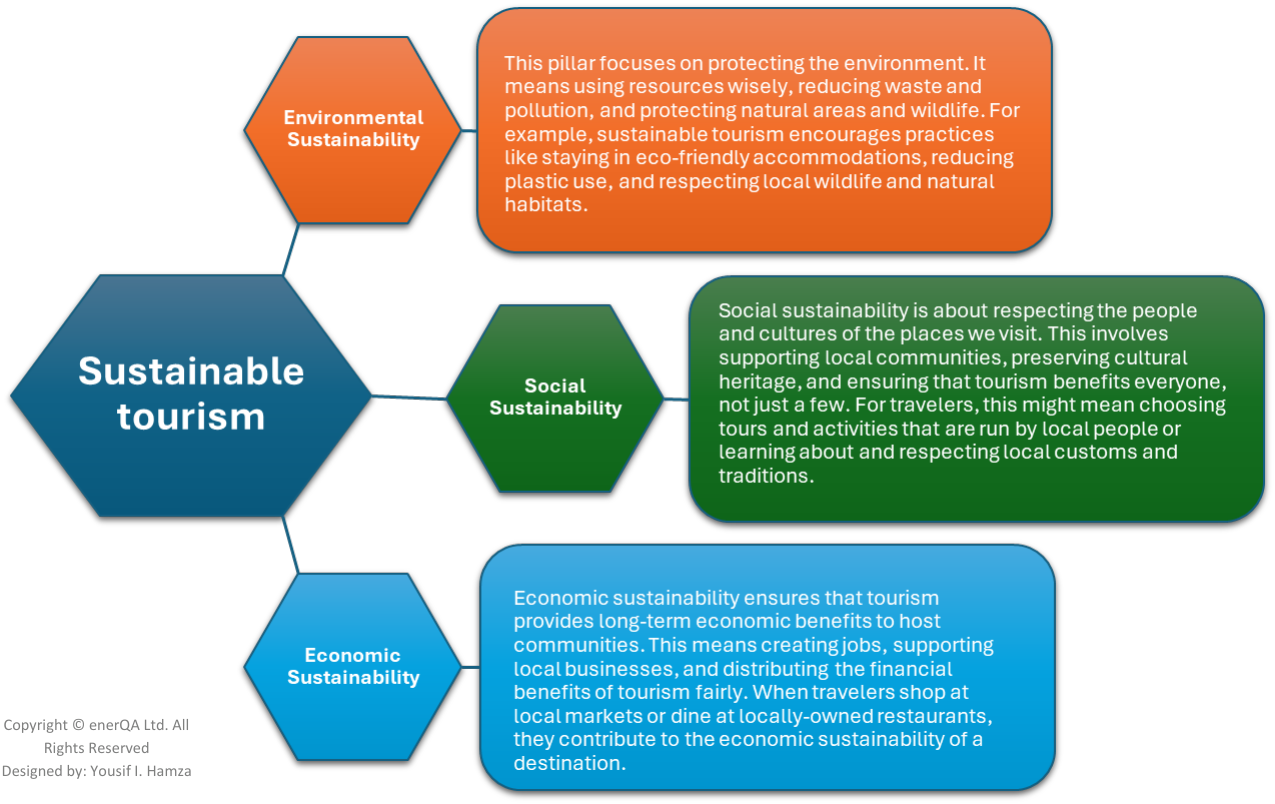
Sustainable tourism is guided by three pillars:
- Environmental Sustainability: Protecting ecosystems, conserving resources, and reducing pollution caused by tourism activities.
- Social Sustainability: Preserving cultural heritage, respecting local traditions, and fostering community engagement.
- Economic Sustainability: Ensuring that tourism generates equitable economic benefits for local communities, promoting long-term prosperity (UNWTO, 2017).
The Triple Bottom Line: People, Planet, and Profit
Sustainable tourism aligns with the “triple bottom line” framework, which emphasizes the interconnectedness of environmental health (planet), social equity (people), and economic growth (profit). By balancing these three factors, sustainable tourism aims to create a holistic approach to development that benefits both current and future generations (Elkington, 1998).
- People: Tourism should benefit local communities. This includes creating jobs, supporting cultural preservation, and ensuring that local people have a say in how tourism develops in their area
- Planet: Tourism should minimize its environmental impact. This means reducing carbon emissions, protecting natural habitats, and encouraging travelers and businesses to adopt eco-friendly practices
- Profit: Tourism should be economically viable, providing income for local businesses and governments. However, it’s important that these profits are used to support sustainable development and are not generated at the expense of the environment or local communities
Why is Sustainable Tourism Important?
1. Protecting Natural Resources
Popular tourist destinations often house fragile ecosystems vulnerable to over-tourism. Sustainable tourism mitigates these risks by adopting measures such as limiting visitor numbers, promoting eco-friendly practices, and supporting conservation efforts (Buckley, 2012).
2. Preserving Cultures and Heritage
Tourism can lead to the erosion of cultural identity and traditions. Sustainable tourism fosters cultural respect and helps preserve unique heritages, ensuring that local communities retain their traditions while benefiting from tourism (Richards, 2018).
3. Supporting Local Economies
Properly managed tourism creates jobs, supports local businesses, and improves community infrastructure. Sustainable tourism ensures these economic benefits are distributed fairly, reducing inequalities and fostering long-term development (UNWTO, 2017).
How Can You Contribute to Sustainable Tourism?
- As a Traveler: Choose eco-friendly accommodations, reduce plastic use, and support local businesses.
- As a Tour Operator: Design environmentally sensitive tours, engage with local communities, and educate clients about sustainable practices.
- As a Community Member: Advocate for sustainability, participate in tourism planning, and educate visitors on preserving cultural and natural heritage.
Summary
Sustainable tourism transcends traditional travel by emphasizing responsibility and mindfulness in every journey. By protecting natural resources, preserving cultural heritage, and supporting local economies, sustainable tourism ensures that the benefits of travel are shared equitably while minimizing its adverse effects. As travelers, tour operators, or community members, we all have a role to play in fostering tourism that respects and sustains the world’s diverse landscapes and cultures.
References
- Buckley, R. (2012). Sustainable Tourism: Research and Reality. Annals of Tourism Research, 39(2), 528–546.
- Elkington, J. (1998). Cannibals with Forks: The Triple Bottom Line of 21st Century Business. New Society Publishers.
- Richards, G. (2018). Cultural Tourism: A Review of Recent Research and Trends. Journal of Tourism and Cultural Change, 16(2),95–107.
- UNEP & WTO (2005). Making Tourism More Sustainable – A Guide for Policy Makers. United Nations Environment Programme and World Tourism Organization.
- UNWTO (2017). Tourism and the Sustainable Development Goals – Journey to 2030. United Nations World Tourism Organization.
- UNWTO (2023). What is Sustainable Tourism? United Nations World Tourism Organization. Available at: https://www.unwto.org.
Related Content
Scope 4 Emissions: The Concept of Avoided Emissions
In the global effort to combat climate change, the focus has traditionally been on reducing greenhouse gas (GHG) emissions from corporate operations and value chains.
Read Article →The Imperative for ESG Readiness Tools: Unlocking Benefits for Companies, Institutions, and Society
Environmental, Social, and Governance (ESG) considerations have evolved from being a corporate trend to becoming essential criteria for sustainable and ethical growth.
Read Article →DPSIR Framework for Sustainable Aquaculture in the Red Sea Region (KSA): A Climate Adaptation and Mitigation Perspective
This paper is a contribution to the 6th International Workshop on Applied Research for Enhancing the Aquaculture Sector in Saudi Arabia.
Read Article →